Madrid Metro faces major summer closures on L6, L7, L9B, and L10. Key stations like Moncloa and Gregorio Marañón are affected. Free replacement buses will operate on impacted routes.
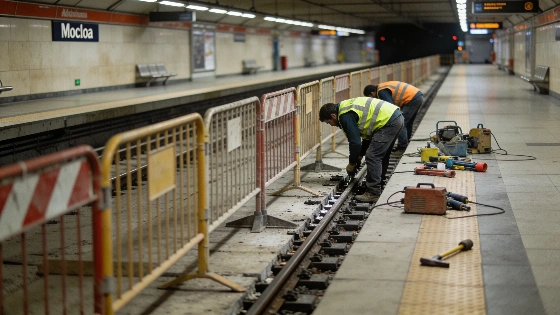
Madrid’s Metro network is set for a challenging August as extensive engineering works force the closure of several critical lines and stations. From this Saturday, Moncloa station on Línea 6 will shut its doors, halting service between Argüelles and Ciudad Universitaria. Just a day later, Línea 7 will be suspended between Gregorio Marañón and Pitis, adding to ongoing disruptions on L9B and L10. These closures, driven by infrastructure upgrades and modernization projects, will impact thousands of daily commuters and travelers across the capital.
The shutdown at Moncloa, which will last until September 2, is part of a broader effort to renew tracks and reinforce platforms in preparation for the future automation of Línea 6. According to Metro de Madrid, the timing of these works was chosen because previous closures in 2025 could not include Moncloa, as it then served as a terminus for the line. The current project aims to install platform doors and upgrade the station’s infrastructure, a move expected to improve safety and efficiency in the long term.
Meanwhile, starting Sunday, service on Línea 7 will be interrupted between Gregorio Marañón and Pitis until August 28. This closure is necessary to advance the renewal of the signaling system and track rails, part of a €33 million investment to modernize the entire stretch from Estadio Metropolitano to Pitis. The works will cover 20 kilometers of tunnel and 24 stations, reflecting the scale of Madrid’s ongoing transport overhaul.
In addition to these new disruptions, the closure of Línea 9B (TFM) between Rivas Vaciamadrid and Arganda del Rey remains in effect until August 13. To maintain mobility, the Madrid City Council and Empresa Municipal de Transportes (EMT) have deployed two free special bus services: SE6, linking Ciudad Universitaria and Argüelles, and SE7, connecting Gregorio Marañón and Pitis. SE6 will run every six minutes on weekdays and every seven to eight minutes on weekends and holidays, while SE7 will operate every seven minutes on weekdays and every nine minutes on weekends. Both services will mirror Metro’s operating hours and are designed to minimize inconvenience for passengers.
Service on Línea 10 (Hospital Infanta Sofía–Puerta del Sur) also remains suspended between Plaza de Castilla and Nuevos Ministerios due to ongoing works at Cuzco and Santiago Bernabéu stations. This interruption, which began in March and was extended in July, is scheduled to last until August 21. EMT’s special S10 bus line is providing surface transport along the affected section, and Metro has reinforced service on lines 1 and 9, as well as on bus routes 27 and 147, which run along Paseo de la Castellana.
These widespread closures come as Madrid continues to invest heavily in its public transport infrastructure, aiming to modernize key lines and improve long-term reliability. The city’s approach mirrors broader efforts across Spain to adapt urban services to changing needs, as seen in other regions responding to extreme weather or social challenges—such as Barcelona’s recent opening of a daytime shelter for the homeless during the heatwave, detailed in this report on new climate shelters.
Madrid Metro is one of Europe’s largest urban rail systems, serving millions of passengers each month. Summer is traditionally chosen for major works due to lower ridership, but the scale of this year’s interventions is notable. The city’s reliance on replacement buses and alternative routes highlights both the complexity of maintaining such a vast network and the authorities’ efforts to limit disruption. Passengers are advised to check updated schedules and allow extra travel time while these works continue through August.