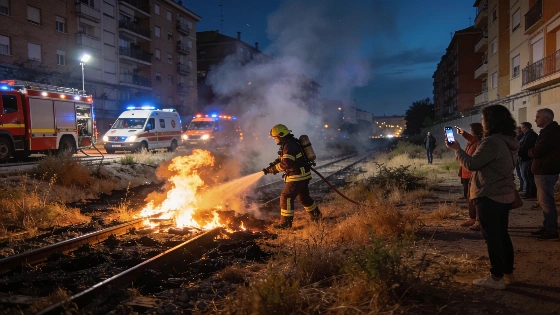
A fast-moving fire broke out on ADIF land near Casablanca, threatening nearby homes. Residents blame years of neglect and demand urgent action. City officials now face renewed pressure to address the risk.
A serious fire erupted late on July 6 in the Casablanca neighborhood of Zaragoza, igniting widespread concern among residents after flames rapidly spread across overgrown ADIF-owned land near the local level crossing. The incident, which threatened homes bordering the railway plots, has intensified criticism of the persistent lack of maintenance on these properties.
According to the Casablanca Neighborhood Association, the blaze was first spotted by locals who noticed flames racing through dense weeds and dry vegetation. Residents immediately alerted emergency services, fearing the fire could reach residential buildings. Thanks to the swift intervention of firefighters and emergency crews, the situation was brought under control before causing major damage or injuries.
The association has long warned about the risks posed by the neglected ADIF land, repeatedly calling for regular clearing and maintenance. In the aftermath of the fire, they renewed their demand for urgent action, insisting that ADIF must take immediate responsibility for cleaning and clearing the affected areas to prevent future incidents. The association's president, Mari Carmen Checa, emphasized that the safety of Casablanca's residents cannot be postponed any longer.
City authorities are now under increased pressure to address the issue. Alberto Castellano, the city councillor for Citizen Participation, had already scheduled a meeting with the company responsible for maintenance to discuss clearing the level crossing and its surroundings. In light of the fire, this meeting—set for Tuesday at 11:00—has taken on new urgency, with local officials acknowledging that preventive measures are now a top priority.
This incident echoes similar emergencies in Spain, where overgrown and poorly maintained land has contributed to the rapid spread of wildfires. For example, a recent major blaze in La Bisbal d'Empordà forced lockdowns in several Catalan towns, highlighting the broader risks associated with neglected vegetation during the dry season.
Spain's hot, dry summers make areas with unmanaged vegetation particularly vulnerable to fire. National regulations require property owners, including public entities like ADIF, to maintain their land to reduce wildfire risk. However, enforcement and compliance often lag, especially on plots bordering urban neighborhoods. The Casablanca fire has reignited debate over the responsibilities of public infrastructure companies and the need for coordinated action between local authorities and national agencies. As climate conditions continue to heighten fire risks across the country, the pressure for systematic land management and preventive measures is only expected to grow.