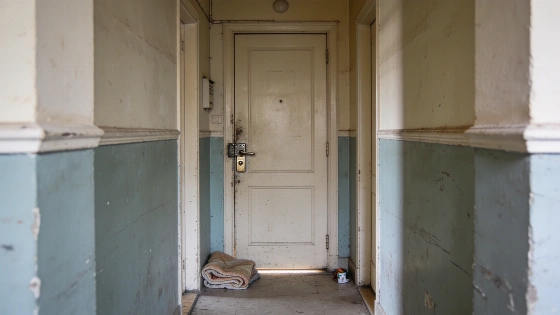
An 87-year-old woman's eviction has sharpened Spain's housing debate. Pedro Sánchez's Government now needs support in Congress for an urgent decree.
Maricarmen had lived in her Madrid home for 71 years before she was evicted at the age of 87. The removal has drawn condemnation from Spanish politicians and criticism from abroad. It has also put fresh pressure on Pedro Sánchez to win support for an urgent housing decree.
The case is no longer only about one eviction in Chamberí. The United Nations has questioned what happened. Amnistía Internacional has condemned the outcome. International media have reported on the removal as an example of Spain's housing shortage and the clash between property investment and the right to housing.
Isabel Díaz Ayuso said that around 25,500 evictions take place in Spain each year, presenting the figure as an argument against treating Maricarmen’s case as an isolated political event.
Congress felt it.
One week before Maricarmen was evicted, Sumar brought a proposal against vulture funds to the chamber. It failed even to reach the stage of parliamentary consideration. PP, Vox, Junts and UPN voted against it. PSOE and PNV abstained, according to reports on the vote. The result showed how hard it will be to build a majority for tougher housing measures while the Government faces demands for immediate action.
Pedro Sánchez has said he has not ruled out approving a new Real Decreto-ley de vivienda on an urgent basis after Maricarmen's case. The measure has not been approved in the material available here. It would still need enough support in Congress. A decree-law would also need congressional confirmation within 30 days. The Government must now turn the public reaction into a workable agreement. It cannot present a proposed decree as an approved reform.
The Comunidad de Madrid says it offered Maricarmen a place in a public care home twice and that regional authorities and Madrid’s city government worked together on the case. The claim is disputed politically, but it is central to the regional government’s defence of its conduct.
The dispute has become a fight between institutions. The Executive has blamed the Comunidad de Madrid for the eviction. Isabel Rodríguez accused Isabel Díaz Ayuso of favouring speculators. The PP expressed regret over what happened and blamed the lack of legislation on the Government. The Government delegate in Madrid called the eviction "deeply unjust and unacceptable". Pressure on the regional authorities grew.
Outside the apartment, the response was immediate. Dozens of people gathered near the Chamberí home after the eviction. Irene Montero, Gabriel Rufián and Enrique Santiago were there. The protest brought the political dispute into the street. It also linked the parliamentary debate to demands for protection against removals that could leave people without a home.
Koldo Casla, the relator especial de la ONU en España, said the case could involve judicial errors. He argued that any eviction capable of leaving someone on the street should be halted. Amnistía Internacional also called the removal a human-rights violation. The organisation linked it to what it described as a failure by Spain's institutions to protect vulnerable people.
Amnistía Internacional said that evicting an older person with a disability without alternative accommodation, with rental prices high, conflicts with United Nations conclusions that such removals can be unlawful. It also criticised several parties and the Government for delaying the new rules.
The Government's wider housing plan had already been described as covering more than evictions. As an earlier housing report noted, the proposed decree could also affect students and landlords if Congress supports it. Spanish and Catalan media have reported discussions about a possible two-year extension of certain rental protections until June 2028. The talks have also included regulation of seasonal rentals and the return of safeguards for vulnerable families facing eviction. Maricarmen's case has made evictions the measure's most urgent political issue.
Sumar has called for another step: expropriating Maricarmen's apartment from the management company Urbagestión. That demand would turn the case into a proposed political and legislative precedent. Sumar and Podemos have also proposed limits on the influence of investment funds in the housing market. One public estimate cited in the debate puts the number of homes held by such structures across Spain at 650,000.
The facts leave little room for another symbolic gesture. A rejected proposal against vulture funds, a disputed eviction and an unapproved emergency decree have made the issue a question of votes and enforceable rules. The UN and Amnistía Internacional have added weight to the case. The mobilisation in Madrid has kept it in public view.
The Government must explain what its decree would change. It must also win the majority needed to pass it. Until then, Maricarmen's eviction shows the gap between the right to housing and the protection available when an eviction goes ahead. That gap is now the political cost of delaying a concrete housing response.