A shooting on Memorial Drive left two people wounded and many others narrowly escaping harm. Newly released court documents describe how a Marine veteran and a state trooper stopped the attack. The suspect now faces 43 charges after a series of close calls.
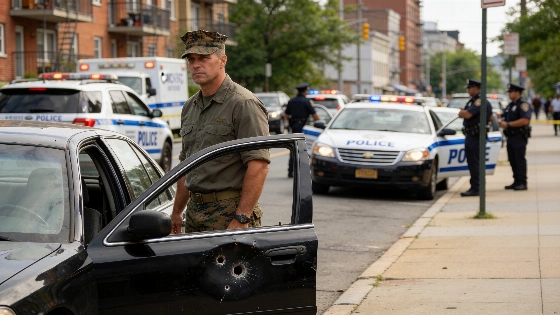
The shooting on Memorial Drive ended when a Marine veteran, caught in the crossfire, drew his own gun and confronted the shooter. Working with a state trooper, he helped stop the violence before anyone was killed. Although bullets hit his car door, neither he nor the trooper was hurt, according to court documents released Thursday.
The documents give the clearest account so far of the May 11 incident in Cambridge. Tyler E. Brown IV, 46, is accused of firing at random into cars, buildings, and at bystanders, causing panic along the busy road. Two people were wounded, but the number of shots fired and the close calls suggest the outcome could have been much worse. Brown now faces more than 40 charges, including six counts of armed assault to murder, as well as weapons and property damage charges, after a grand jury indictment moved the case to Middlesex Superior Court, according to NBC Boston and The Boston Globe.
"Investigators recovered at least 70 spent shell casings at the scene, highlighting the chaotic and sustained nature of the attack."
— The Boston Globe
One bullet tore through a mail truck, grazing the driver’s uniform but missing her. Another shattered an apartment’s glass door just after a resident stepped away. A third round slipped through a gap in a car window, missing the driver by inches. In another case, a bullet passed through the back of a USPS truck, a metal divider, and a jacket before exiting the windshield, barely missing the driver. The randomness of the shooting put dozens of motorists, pedestrians, and residents at risk.
Prosecutors say Brown had been released from a psychiatric hospital days before the shooting and was using crack cocaine. His parole officer had warned authorities that Brown was suicidal and armed, but the alert came too late. According to WBUR, the parole officer called 911 after Brown showed a gun over FaceTime, and police later tracked him to Cambridge. Brown took an Uber to the city, approached a man in a Dunkin’ Donuts parking lot, and said he was ready to "take anyone out" after "serving 25 years."
The violence escalated quickly. Brown allegedly shot a driver, identified by family as Casimir Bangoura, several times. Bangoura survived and is expected to recover. Another victim, Felix, an MBTA Ride van driver and father of eight, was hit in the head by a bullet fragment after making a U-turn to escape. He drove himself to the hospital and was released the same day. Both men survived, though their injuries were serious, according to media reports.
"Court filings and media reports indicate that at the time of the incident, Brown was on parole for a previous weapons-related offense involving four Boston police officers. This background, combined with his recent release from psychiatric care, has intensified public and legal scrutiny of the case."
— NBC Boston
Other close calls included two women in a school bus van who escaped as bullets hit their side mirror, and a driver who fled just before Brown smashed his window with a gun. The court documents describe a series of split-second decisions that spared lives but left the community shaken.
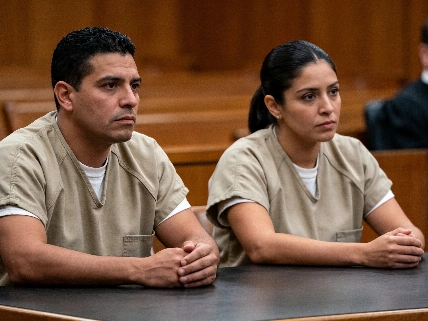
Brown faces 43 charges, including six counts of armed assault to murder and multiple counts of assault and battery with a firearm. He appeared in court in a wheelchair and pleaded not guilty. The weapon used, a BCI-Defense Model FF-15, had changed hands several times since its legal purchase in 2015, with its last transfer untraceable after the previous owner’s death. As a convicted felon, Brown was not allowed to have firearms.
At the time of the shooting, Brown was on parole for a previous incident involving four Boston police officers. After his release, he briefly joined the Tufts University Prison Initiative, a reentry program, but left in February. He remains held without bail, with a dangerousness hearing set for October 8, according to WBZ and The Boston Globe.
Этот случай подчеркивает пробелы в системе психиатрической помощи, надзора за условно-досрочно освобожденными и доступа к оружию в Массачусетсе. То, что так много людей выжили после того, что могло стать массовой стрельбой, произошло не столько благодаря официальным мерам безопасности, сколько благодаря быстрым действиям случайного прохожего. Недостатки в отслеживании огнестрельного оружия и игнорирование предупреждающих знаков вызывают вопросы у правоохранительных органов и политиков. Пока продолжается судебный процесс, стрельба на Мемориал Драйв является ярким примером того, что может произойти, когда риски остаются без контроля, а системы не принимают необходимых мер.