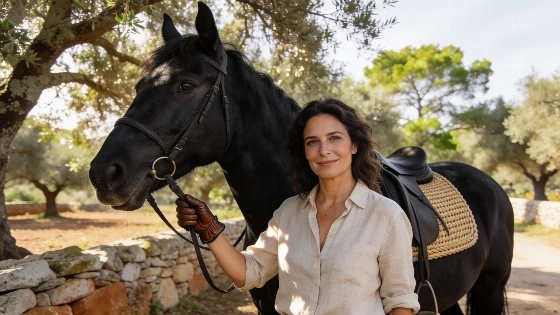
Marta González, journalist and entrepreneur, has become a leading voice in global equestrian tourism. Her journey from personal crisis to international influence highlights the sector’s transformation and Spain’s rural potential.
Marta González, known for her work in journalism and business, has emerged as a prominent figure in the international equestrian tourism sector. Based in Menorca, she has leveraged her family heritage and personal setbacks to build a career that now shapes the direction of the Organización Mundial del Turismo Ecuestre (OMTE). Her story reflects not only personal resilience but also the changing face of Spain’s rural economy and the growing role of women in traditionally male-dominated fields.
González’s connection to horses began in childhood, influenced by her father, the late Dámaso González. Early experiences on the family estate in Viveros instilled in her a lasting appreciation for animals and rural life. Despite initially pursuing journalism and political science with an eye toward academia, she found herself drawn back to her roots during a period of personal difficulty. This return marked the start of her involvement in equestrian communication, a field then considered niche.
Her first major opportunity came in 2013, when she began writing a horse-focused blog for ¡HOLA!. At the time, the sector was far from mainstream, and González faced skepticism about its viability. However, her commitment to animal welfare and rural development quickly set her apart. Over the past decade, she has built a reputation for both advocacy and content creation, helping to raise awareness about the importance of responsible tourism and the welfare of horses.
Today, González holds a key position within the OMTE, where she and her partner, Fabri, have introduced animal welfare certification as a core standard for equestrian tourism. This initiative aims to ensure that the industry’s rapid growth does not come at the expense of ethical treatment or local economic support. González notes that the sector has become more inclusive, with women increasingly leading projects and businesses, particularly in rural areas where such opportunities can be transformative.
Her professional journey is closely tied to her personal life. After years of struggling to balance her passion for horses with her work in event planning, González found stability alongside Fabri, a horse trainer. Together, they have managed to integrate their careers without sacrificing their individual ambitions. González emphasizes that finding the right partner allowed her to maintain her lifestyle rather than compromise it—a sentiment echoed by others who have overcome adversity in the public eye, such as Boris Izaguirre, whose resilience was recently highlighted in a feature on overcoming trauma and adversity.
González’s work extends beyond Spain. She has participated in equestrian journeys across Indonesia, Mexico, Argentina, and Africa, each experience deepening her understanding of the cultural and economic significance of horses. In Menorca, she has played a role in promoting the Pura Raza Menorquina, a breed celebrated for its elegance and unique abilities, through events like the Menorca Horse Week. These efforts have positioned the island and its equestrian heritage on the global stage.
Her advocacy for rural revitalization is rooted in practical experience. González argues that equestrian tourism can help counter depopulation in Spain’s interior by creating year-round employment and supporting local economies. She points out that Spain is already the second most in-demand country in Europe for equestrian tourism, but further investment and international promotion are needed to fully realize its potential.
Despite her achievements, González’s path has not been without setbacks. The theft of sentimental family items from her estate was a significant blow, underscoring the emotional weight of her heritage. Nevertheless, she remains focused on maintaining family unity and supporting her sisters and mother, who remain central to her sense of belonging.
González’s daily life is a balance between her executive responsibilities and her passion for horses. She manages a demanding schedule, particularly during the wedding season, but has learned to prioritize peace and personal growth. Her approach to well-being includes disciplined routines, faith, and a commitment to authentic relationships—values she attributes to her rural upbringing.
Looking ahead, González continues to pursue projects that align with her commitment to animal welfare and rural development. She is particularly invested in new initiatives at Los Prados, her family estate, and remains open to future adventures, especially those that allow her to explore the world on horseback alongside Fabri. Her story illustrates how personal adversity can lead to unexpected opportunities and how Spain’s rural traditions can find new relevance in a changing world.
For context, Spain’s equestrian sector is recognized for its diversity of breeds, favorable climate, and deep-rooted traditions. The country’s rural areas face ongoing challenges related to depopulation and economic sustainability, making innovative tourism models increasingly important. As the OMTE and similar organizations push for higher standards and broader recognition, figures like González are likely to play a pivotal role in shaping the future of rural tourism and animal welfare in Spain.