Marta Higueras has unveiled Independientes por Madrid, aiming to break the city’s left-right deadlock. The new platform promises a strictly local focus ahead of the 2027 municipal elections.
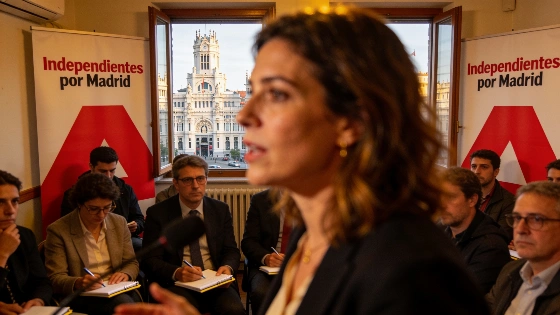
A year ahead of Madrid’s next municipal elections, former deputy mayor Marta Higueras has introduced a new political platform, Independientes por Madrid, with the goal of disrupting the entrenched left-right split at city hall. The announcement, made in a modest venue in central Madrid, signals a direct challenge to the dominance of national party agendas in local governance.
Higueras, who served as first deputy mayor under Manuela Carmena, emphasized that her initiative is neither left-wing nor right-wing, but strictly municipalist and independent. She argued that Madrid’s main problem is not its size or complexity, but the way national party politics have overshadowed local priorities. According to Higueras, city council debates have become extensions of national disputes, leaving residents’ concerns sidelined.
During her presentation, Higueras distanced herself from her previous political labels and insisted that Independientes por Madrid will focus exclusively on city issues, without regional or national ambitions. She described the platform as a response to citizens who feel abandoned by traditional politics, and pointed to the existence of thousands of independent councillors and hundreds of mayors across Spain as evidence that such a movement can succeed in the capital.
The platform’s approach centers on consensus and practical agreements, referencing past cross-party deals such as the Villa Accords during the pandemic and budget negotiations that allowed for dozens of measures to be included in the city’s accounts. Higueras argued that these types of agreements, rather than constant confrontation, are what actually improve daily life for residents.
While a detailed program has not yet been released, Higueras outlined key priorities: housing, cleanliness, transport, mobility, local commerce, and neighborhood security. She stated that the platform’s proposals will be shaped through meetings with neighborhood associations, businesses, workers, freelancers, and social groups. A dedicated website has been launched to collect citizen input and encourage participation.
Higueras declined to reveal potential candidates or discuss post-election alliances, indicating that more details will be presented in September after a summer spent engaging with communities and finalizing the program. She also left open the possibility of supporting proposals from any party, including Vox, as long as they are limited to municipal matters and benefit Madrid’s residents.
The launch of Independientes por Madrid has already drawn responses from established parties. Rita Maestre, spokesperson for Más Madrid, downplayed the potential impact on progressive voters and stressed the importance of strengthening existing organizations to build an alternative majority to the current PP and Vox government. Maestre highlighted Más Madrid’s growth and its ongoing preparations for the 2027 elections, which include upcoming primaries and internal debates about party structure and leadership.
The Socialist group at city hall is also in transition, with Enma López announcing her candidacy for the party’s primaries. This period of internal competition and renewal among Madrid’s main opposition parties sets the stage for a more fragmented and unpredictable electoral landscape. The emergence of Higueras as a prominent independent figure adds further complexity, as she seeks to carve out a space distinct from the established forces at Cibeles.
This development comes as Madrid’s political scene is already marked by early moves for the 2027 elections. For example, the PSOE’s decision to open its primary race has triggered a wave of candidacies and internal debate, as detailed in recent coverage of the party’s internal tensions.
Madrid’s city council has long been a battleground for national party interests, often at the expense of local issues. The rise of Independientes por Madrid reflects a broader trend in Spanish politics, where local platforms and independent candidates are gaining ground in response to voter frustration with traditional party dynamics. As the 2027 elections approach, the city’s political landscape appears set for significant change, with new actors and alliances likely to reshape the balance of power.