Mauricio Verbichi left a secure job in Buenos Aires to start over in the countryside. Now living in La Paz, Córdoba, he builds his own house and income, finding calm in uncertainty and more time with his family.
When Mauricio Verbichi quit his steady job at an automotive factory in Buenos Aires, he wasn’t following a fad or running from a crisis. He was keeping a promise to himself: to reach forty “autojubilado y en paz”—self-retired and at peace. At 37, he made the move early, swapping the city’s routine for the open fields of La Paz in Córdoba’s Traslasierra region.
His decision wasn’t a blind leap. Years on the factory floor had left him questioning the value of a fixed schedule and predictable pay. A motorcycle accident forced him to reconsider his priorities and revisit old goals he’d written down but put aside.
The first steps of Verbichi's move involved weekend trips with his family to clear the land before any construction began.
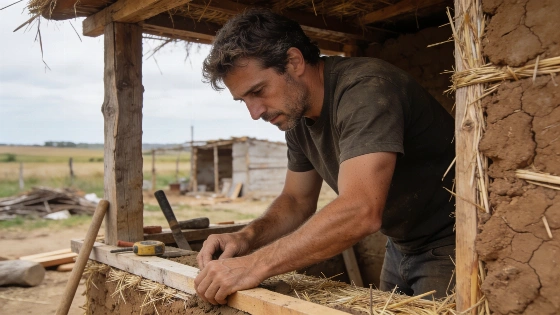
He didn’t just change his address—he changed how he lived each day. In La Paz, Verbichi started building his own house using quincha, a traditional mix of wood, straw, and mud. The land had no urban comforts. Instead of waiting for utilities, he set up a small solar panel and built a rainwater collection system. One of his first projects was a clay oven, made by hand, for cooking.
“No tener trabajo fijo es una tranquilidad,” he told the YouTube channel Crónicas del Cambio - De Música Rutera in an interview published on April 24, 2026. For Verbichi, not having a fixed job brings relief, not worry. He earns a living however he can—gardening, cooking, repairs—using his skills to meet whatever work comes up. “Trabajo siempre sale,” he said. Cronista notes that this approach is becoming more common in the region, where flexible skills and self-reliance matter more than ever.
Leaving the factory didn’t mean giving up work. It meant redefining it. Instead of depending on one employer, Verbichi now juggles different trades, balancing construction with supporting his family. He admits the fear of instability is real, but he uses it as motivation: “Yo uso el miedo como un empuje.”
Traslasierra, the region where Verbichi settled, has recently been highlighted in the news for its rural character and ongoing infrastructure projects, as well as notable weather events such as snowfall in the Córdoba sierras.
Family was a big reason for the move. As a father of three, Verbichi wanted more time with his children and a slower, more intentional pace. The countryside, with its mix of challenges and freedoms, gave him a way to reclaim both. He keeps building his home and piecing together his income, finding satisfaction in the independence and the visible results of his work.
As reported by Google/SpainAuto, Verbichi’s story isn’t about rejecting work, but about taking control of his time and priorities. His experience reflects a growing interest in different ways of living and working, especially as traditional jobs come under question. Not everyone will follow his path, but his choices show the value of flexibility, resilience, and facing uncertainty directly. For some, real peace comes not from stability, but from letting go of the fixed and embracing what’s unpredictable.