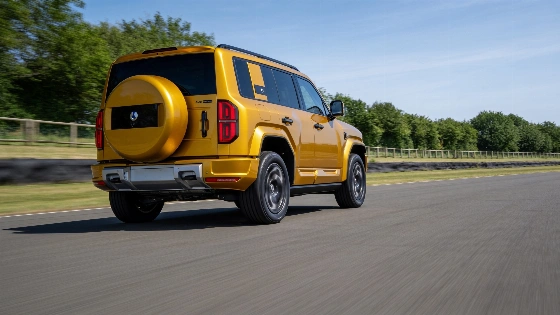
Mazda has reworked its 6e and CX-6e electric cars to better suit European roads and driving habits. While the partnership with Changan brought advanced tech, Mazda found that only a thorough retuning could make these models a real alternative to rivals like Tesla.
When Mazda set out to compete with the Tesla Model 3 using its new 6e, it ran into a challenge that numbers alone couldn’t fix. The specs—range, tech, price—were already in line with the competition. What was missing was the driving feel that matters to European buyers: a sense of connection to the road that goes beyond comfort or digital features.
This difference became obvious as Mazda’s collaboration with Changan produced electric cars aimed at a different market. In China, the focus is often on rear-seat comfort and space. Long wheelbases, soft suspensions, and plush back seats are common, reflecting a culture where being driven is as important as driving.
The European Mazda 6e features a new 78 kWh LFP battery, enabling DC fast charging at up to 200 kW and a range of approximately 560 km—key upgrades over the original version.
Moritz Oswald, Mazda’s Project Manager for Europe, points out that this cultural split shapes how a car feels. European drivers expect sharp steering, clear feedback, and a car that rewards active driving—even on the daily commute. When Chinese-developed models arrive in Europe unchanged, the result is a mismatch.
That’s why Mazda’s European team went further than just meeting regulations. They recalibrated the steering, adjusted the accelerator response, and reworked the chassis so the 6e and CX-6e would feel like Mazdas on European roads. The aim was to deliver the kind of driving experience the brand is known for, not just tick boxes on a feature list.
This stands apart from many Chinese electric SUVs, which often prioritize comfort but can feel disconnected on twisty roads. It’s not a technical flaw, but a design choice based on what Chinese buyers want. Even brands like BMW and Mercedes have long offered extended-wheelbase models in China for this reason.
According to several European automotive publications, Mazda’s latest 6e and CX-6e models were not only adapted for local driving dynamics but also benefit from a significantly reduced charging time: the new battery allows a 10–80% charge in about 24 minutes, a major improvement over previous configurations. This technical leap is seen as essential for competing with established players like Tesla in Europe.
For European drivers, sharper handling, more direct steering, and a progressive brake feel are essential. As Chinese brands expand in Spain and across Europe, they face the task of rethinking not just their technology, but their whole approach to what makes a car appealing.
Mazda’s strategy marks a shift. Competing on price, screens, or battery size is no longer enough. Success in Europe will depend on understanding—and delivering—the subtle qualities that make a car enjoyable to drive. As reported earlier, Spanish buyers are paying more attention to the details that affect real-world use, not just headline specs.
According to Google/SpainAuto, Mazda’s move to adapt its Chinese-developed models signals a new phase in the electric car market. The next round of competition will be decided not by who offers the most power or the lowest price, but by who understands what European drivers actually want from their cars.