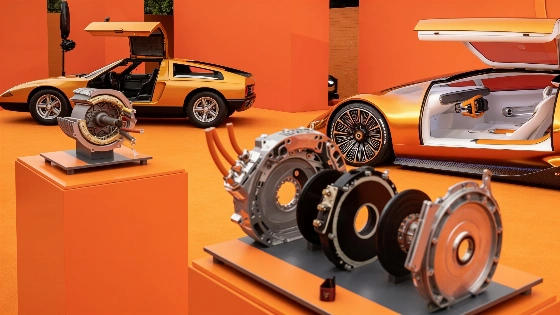
Mercedes and its subsidiary YASA have developed an electric motor weighing just ten kilos that can deliver up to 1000 horsepower per unit. This advance in axial flux technology could make bulky, heavy EV motors a thing of the past and reshape the future of high-performance cars.
Mercedes and YASA have built an electric motor that weighs only ten kilograms but can produce up to 1000 horsepower per unit. The motor, about the size of a carry-on suitcase, is already being tested in Mercedes-AMG’s next generation of sports cars. When scaled, the output could theoretically reach 10000 horsepower on a single platform.
For years, electric vehicles have been limited by the size and weight of their motors. Traditional radial designs forced engineers to work around heavy, bulky components. YASA’s axial flux design changes this: by aligning the magnetic field parallel to the axis of rotation, the motor becomes a thin disc and cuts unsprung mass by more than half compared to conventional systems.
According to the German Association of the Automotive Industry, the adoption of axial flux motors could reduce the overall weight of electric drivetrains by up to 30% in future vehicle generations.
This drop in weight is more than a technical detail. It lets carmakers rethink how they design their vehicles. With less space and weight taken up by the powertrain, designers can improve chassis layout, weight distribution, and even make room for lighter, more efficient battery modules. The result: sharper handling, better aerodynamics, and new possibilities for performance.
Managing heat has always been a challenge for high-performance EVs. Overheating under heavy use can sap power and shorten component life. YASA addresses this with direct liquid cooling that constantly bathes the stator, keeping output stable even during hard driving or track use. This could mean the end of sudden power drop-offs in electric sports cars.
Other manufacturers are also working to push EV performance further, but so far none have matched the power-to-weight ratio shown by YASA’s axial flux motor.
According to a recent report by BloombergNEF, global investment in electric vehicle powertrain innovation reached a record $52 billion in 2023, with a significant portion directed toward next-generation motor technologies such as axial flux designs. Industry analysts note that this surge in funding is accelerating the commercialization of advanced electric propulsion systems across both premium and mass-market segments.
The impact is immediate. By removing the need for oversized, heavy motors, Mercedes and YASA are setting a new standard for the industry. The technology is already in AMG prototypes, suggesting that the era of bulky electric drivetrains is ending. For drivers, this could mean electric cars that are faster, more agile, and more efficient.
What matters most is not just the numbers, but the shift in approach. Mercedes is betting that the future of electric cars will be shaped by efficiency and performance, not by small tweaks to old designs. If YASA’s axial flux motor lives up to its promise, other manufacturers will likely have to follow.