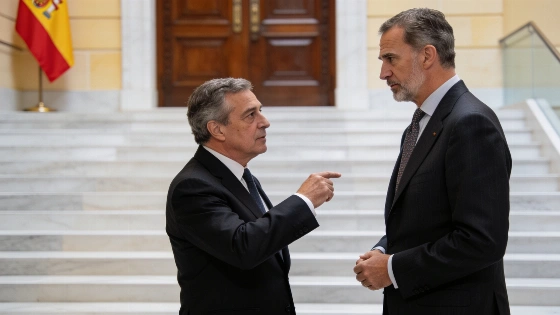
Transport Minister Óscar Puente called the King's meeting with Javier Negre an 'absolute ignominy'. The incident has triggered rare public friction between the Spanish government and the monarchy.
Spain's political landscape was shaken after Óscar Puente, Minister of Transport and Sustainable Mobility, openly criticized King Felipe VI for his interaction with Javier Negre during an official visit to Colombia. Puente, who has held his ministerial post since November 2023, reposted a message from the anonymous X account Bilboa III República (@BILBOAANTIFA) with the phrase '¡República ya!', amplifying a video where Negre approached the King for a greeting and a photo. Felipe VI, unaware of Negre's identity, responded positively to the request. Puente described the episode as an 'absolute ignominy', a term denoting public disgrace or dishonor.
The incident occurred on August 7 in Cali, during the inauguration of Colombian President Abelardo de la Espriella. King Felipe VI attended the event accompanied by José Manuel Albares, Minister of Foreign Affairs, who coordinated the trip with the Royal Household. The video quickly circulated online, fueling debate over the appropriateness of the monarch's response and the minister's public condemnation.
What makes this episode particularly notable is the rarity of such direct criticism from a sitting PSOE minister toward the head of state. The Spanish Constitution requires ministers to endorse the King's acts and assume responsibility for them, making Puente's public rebuke highly irregular. While freedom of expression protects criticism of the monarchy, the move is widely seen as a breach of protocol and loyalty within the government.
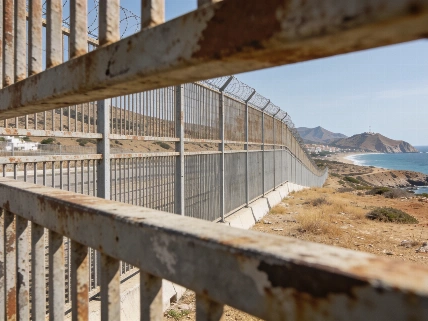
The controversy has exposed underlying tensions between the Royal Household (Zarzuela) and the Prime Minister's office (Moncloa). In recent months, the relationship between the two institutions has been described as strained, with in-person meetings between the King and the Prime Minister reportedly less frequent than the Constitution prescribes. The situation is further complicated by the ongoing crisis in Ceuta, where the King's role has been minimized by the government, despite Felipe VI's efforts to stay informed and meet with relevant authorities.
Puente did not elaborate on what he considered ignominious about the King's conduct, aside from the fact that Negre, described as a far-right agitator and adviser to radical governments, was able to approach the monarch. The King's warm and receptive demeanor in the video has been interpreted by some as a sign of openness, while others see it as a vulnerability in royal protocol. The debate echoes previous controversies over the monarchy's public image and its interactions with polarizing figures. For further context on the political fallout from this meeting, see the analysis of the government's response in this related report.
Experts note that the Spanish monarchy's constitutional role is largely ceremonial, but moments like this highlight the delicate balance between tradition and political reality. The episode has reignited discussions about the monarchy's place in modern Spain, the responsibilities of government ministers, and the boundaries of public criticism. As the country navigates ongoing political challenges, the relationship between the government and the Royal Household remains a focal point for both supporters and critics of the current system.