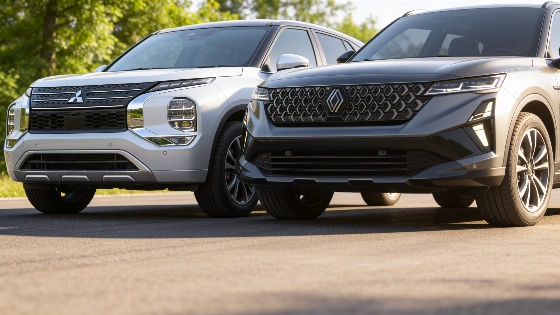
The Mitsubishi Outlander PHEV and Renault Austral E-Tech offer sharply different hybrid experiences for Spanish drivers. We compare their technology, practicality, and value to see which SUV stands out in 2026’s competitive market.
Spanish car buyers face a clear choice in the hybrid SUV segment: the Mitsubishi Outlander PHEV, a plug-in with all-wheel drive, or the Renault Austral E-Tech, a conventional hybrid with front-wheel drive. Both models reflect the growing dominance of hybrids, which now account for over half of new car registrations, but their approaches could not be more different.
Sales and Market Context
The Mitsubishi Outlander, now in its fourth generation and available in Spain since October 2024, saw modest sales last year with just 392 units. However, 2026 has brought a surge, with 676 units delivered in the first seven months—a 228% increase. In contrast, the Renault Austral is a familiar sight on Spanish roads, with 11,491 units sold last year and 6,147 more registered from January to July this year. This makes the Austral one of Renault’s top sellers, just behind the Clio and Captur.
Mitsubishi Outlander PHEV: Space and Electric Range
Measuring 4.72 meters long and 1.86 meters wide, the Outlander projects a robust, almost off-road presence. Its interior is spacious, with a 495-liter boot that expands to 1,404 liters—outclassing the Austral in cargo capacity. Rear passengers benefit from reclining seats, independent climate control, heated seats, and retractable sunshades, though the bench does not slide as in the Renault.
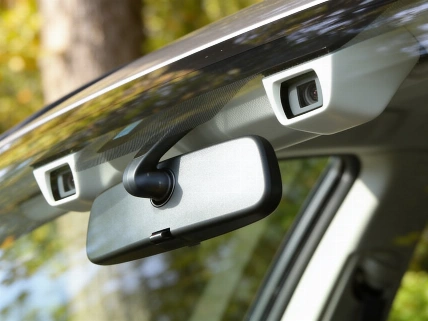
The dashboard is traditional but functional, featuring two 12.3-inch screens for instruments and multimedia, plus physical buttons and dials for climate and menu access. Four trim levels—Motion, Kaiteki, Kaiteki+, and First Edition—offer a range of features, with 18-inch wheels and a four-camera system standard.
Plug-in Hybrid Performance
The Outlander PHEV uses a 2.4-liter petrol engine paired with two electric motors (one per axle), delivering a combined 306 hp. Its 22.7 kWh battery enables up to 86 km of electric-only driving, depending on trim. Charging is possible via AC (up to 3.6 kW) or DC, though the CHAdeMO connector is less common in Spain than the European CCS2 standard.
Renault Austral E-Tech: Versatility and Tech
The Renault Austral is slightly shorter at 4.53 meters but nearly matches the Outlander’s wheelbase. Its starting price for the full hybrid version is €36,909. The Austral’s design is more understated, but inside, it offers a sliding rear bench (up to 16 cm) for flexible space, though the boot is smaller at 430 liters.
The dashboard stands out for its technology: a 9-inch openR link touchscreen with Google services and wireless smartphone integration comes standard, upgraded to a 12-inch vertical display from the Techno trim. The infotainment system is praised for its intuitive operation, outshining some rivals.
Conventional Hybrid Power
The Austral E-Tech 200 combines a 1.2-liter petrol engine (131 hp) with two electric motors—one for propulsion (68 hp), another as a generator (32 hp)—for a total of 199 hp. Power is delivered through a continuously variable automatic transmission. Three trim levels—evolution, techno, and esprit Alpine—are available, all with generous standard equipment including 18-inch alloy wheels, parking sensors, adaptive LED headlights, and a six-speaker audio system.
Which Hybrid SUV Makes More Sense?
The Outlander PHEV’s main advantage is its ability to drive over 80 km on electric power alone, making it ideal for those seeking to minimize fuel use and benefit from Spain’s CERO emissions label. Its all-wheel drive and higher ground clearance also make it more capable on rough roads or in poor weather, while the larger boot and lower starting price add to its appeal.
The Renault Austral, meanwhile, is tailored for comfort and technology on paved roads. Its sliding rear bench and advanced infotainment system cater to families and tech-focused drivers, though it lacks the Outlander’s electric range and off-road ability.
For buyers prioritizing electric range, practicality, and price, the Mitsubishi Outlander PHEV stands out. Those who value a more conventional hybrid experience with strong tech features may prefer the Renault Austral E-Tech.
It’s worth noting that the Spanish hybrid SUV market is evolving rapidly, with new models and technologies arriving each year. For example, the Toyota Corolla Cross GR, recently examined in our coverage, offers a different take on hybrid performance and comfort for Spanish families (see our analysis of the Corolla Cross GR’s strengths).
As hybrid technology matures and incentives shift, the choice between plug-in and conventional hybrids will likely become even more nuanced. For now, the Outlander PHEV and Austral E-Tech represent two of the most compelling options for Spanish drivers seeking efficiency without sacrificing space or comfort.