Juan Manuel Moreno urges Vox to finalize a deal for his investiture. The PP insists on governing alone, citing urgent budget deadlines. Left-wing parties refuse to support the process.
Urgency is mounting in Andalusia as Juan Manuel Moreno, acting president of the Junta, calls on Vox to quickly seal an agreement that would secure his re-election and enable the formation of a new regional government. The Partido Popular (PP) leader made his position clear during a public appearance in Jerez de la Frontera, emphasizing the need for the investiture debate to take place without delay. According to Moreno, the region cannot afford further postponements, especially with critical budget preparations already behind schedule.
The pressure comes as the PP maintains its goal of governing alone, despite lacking an absolute majority. Talks with Vox, the party’s potential partner, have yet to yield a breakthrough. Moreno’s urgency is driven by the legislative calendar: the Andalusian budget for 2027 must be drafted and approved on time, a process that typically begins in June. With deadlines looming, he warned that any further delay could jeopardize the timely approval of the budget, which is due for parliamentary debate by late October.
On June 9, the PP and Vox held their first official meeting to discuss a possible coalition, mirroring arrangements seen in Extremadura, Aragón, and Castilla y León, where similar alliances have allowed the PP to govern despite falling short of a majority. However, negotiations in Andalusia remain at a standstill, with Moreno confirming that there have been no significant developments. He expressed hope that ongoing talks with Vox would be productive, especially since left-wing parties have ruled out any form of support, either by action or abstention, making a deal with Vox the only viable path to a stable government.
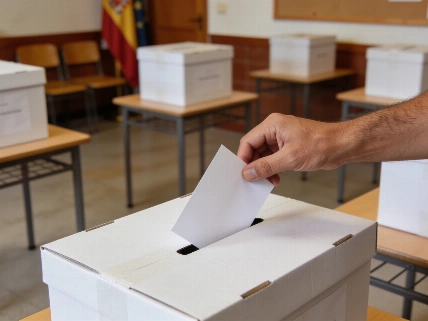
Jesús Aguirre, the PP president of the Andalusian Parliament, is tasked with concluding the round of consultations by June 29, but there is no fixed deadline for scheduling the investiture session. Aguirre has indicated that the debate could take place in the first half of July. Meanwhile, Antonio Repullo, the PP’s regional secretary general, reiterated that Moreno is the only candidate with a realistic chance of being elected and called on other parties to avoid political maneuvering that could block the process. Repullo also stressed that the PP’s objective is to govern alone while ensuring four years of stability.
Disagreements over policy priorities have surfaced during the talks. Notably, the PP has avoided commenting on recent remarks by the mayor of Seville, José Luis Sanz, who criticized Vox’s “national priority” principle as “illegal” and “unconstitutional”—a stance that has appeared in coalition agreements in other regions. Agricultural organizations have also voiced concerns, urging that Vox should not be given control over the Agriculture ministry or see it used as a bargaining chip in negotiations.
As the political standoff continues, the situation in Andalusia reflects broader trends seen in other Spanish regions, where coalition talks have often been contentious and protracted. The need for timely budget approval adds a layer of urgency unique to this case. For context, recent weeks have seen other high-profile political confrontations in Spain, such as the public fallout in 'Valle Salvaje' following a bishop’s arrival, which triggered significant upheaval in the community, as detailed in this report on tensions and public reactions in the valley.
Andalusia is Spain’s most populous region and a key political battleground. The outcome of these negotiations will shape not only the regional government but also influence national dynamics, especially as coalition politics become increasingly common across the country. The PP’s insistence on solo governance, combined with Vox’s demands and the left’s refusal to participate, sets the stage for a decisive few weeks in Seville.