Morocco says the Western Sahara dispute has entered an irreversible phase. Foreign Minister Nasser Bourita tied the claim to a 2025 Security Council resolution and rejected a return to the status quo.
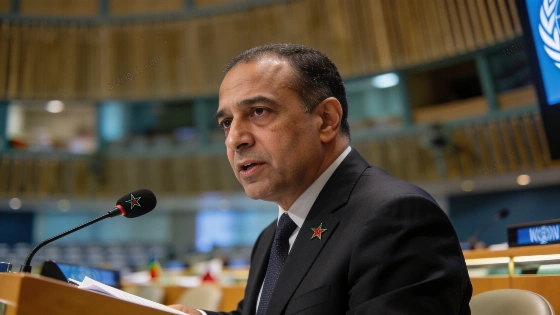
Morocco says the Western Sahara dispute has entered an "irreversible" phase. The political process, it argues, must now be built around Rabat's autonomy proposal. Foreign Minister Nasser Bourita made the case at the United Nations General Assembly in New York. Morocco says autonomy under its sovereignty is the only workable solution.
The position follows Security Council resolution 2797, adopted on 31 October 2025. Bourita presented the text as a break with the previous approach. He said it placed the dispute on a path toward a final settlement. The resolution also extended the mandate of the UN Mission for the Referendum in Western Sahara, MINURSO, until 31 October 2026. That date now sets an important diplomatic deadline.
Resolution 2797 extended MINURSO’s mandate until 31 October 2026. The mandate deadline creates a new window for negotiations over both the territory’s status and the wording of the next Security Council decision.
His language was direct.
In the Moroccan government's reading, the resolution does not leave room for the status quo preferred by other parties. Bourita also argued that its principles and parameters cannot be reshaped through alternative readings or indirect qualifications. In his words, the political train has already left the station. He said those who reject the resolution or violate the ceasefire have damaged their own credibility.
Morocco's reading goes further than that of the resolution's critics. They point out that the text still refers to a mutually acceptable political solution and self-determination. That does not amount to formal recognition of Moroccan sovereignty over Western Sahara.
Algeria and the Polisario Front continue to reject the idea that resolution 2797 has closed off other outcomes. Their stated position remains support for a referendum on self-determination, while Morocco presents autonomy under Moroccan sovereignty as the only realistic framework for a settlement.
The sharpest humanitarian part of the speech concerned Sahrawi refugees living in camps in Tindouf, Algeria. Bourita said their continued presence there could not be tolerated. He accused other parties of holding them as hostages for half a century, in breach of international and humanitarian law.
The refugee camps remain one of the most sensitive issues in the conflict. The subject continues to appear in statements by the parties and in human-rights analysis.
Rabat also linked the dispute to political participation in the territory it calls the "Sahrawi provinces". Bourita urged residents to carry out what he called a national and political duty by taking part in the kingdom's legislative elections, as they had done in the past.
The address did not mention immigration or the crisis with Spain. A related Ceuta report covers a separate episode involving Spain and Morocco. Bourita's UN speech focused on the Sahara and wider international security issues.
He used the rest of the speech to condemn non-state armed groups. He described them as a threat to international security and called for accountability and sanctions against those groups and their allies. He also rejected the idea that Africa should be viewed mainly as a continent of conflicts or problems.
On the Middle East, Bourita backed a two-state solution for Israel and Palestine. He called for respect for the Gaza ceasefire and defended the role of the UN agency for Palestinian refugees. He added that Morocco is taking part in an international stabilisation force in the enclave after joining it in July.
The speech set out Morocco's position clearly. Rabat is no longer presenting autonomy as one option among several. It wants the international process to use that proposal as its framework.
The dispute still depends on whether the other parties accept Morocco's reading of the 2025 resolution. The UN Security Council decision has given the autonomy proposal a more central place in the negotiating framework. It has not produced agreement among Morocco, Algeria and the Polisario Front.
Morocco has also pointed to new diplomatic support for its autonomy initiative. In September 2026, Burkina Faso and Sierra Leone, along with individual US political figures, publicly reaffirmed support for Morocco's position. Rabat presents those statements as evidence that international backing is growing. They do not replace a negotiated settlement or formally change the UN's status framework.