Morocco has secured unprecedented support from the US and Israel, reshaping the Western Sahara dispute. Spain faces renewed pressure over Ceuta and Melilla as Rabat asserts itself on the international stage.
Morocco’s foreign policy has become more assertive since the Trump administration recognized its sovereignty over Western Sahara and Rabat deepened its alliance with Israel. This new approach has put Spain in a difficult spot, especially as Morocco’s statements about Ceuta and Melilla have grown sharper ahead of key UN votes and domestic elections.
The shift began in late 2020, when Donald Trump broke with decades of international policy and endorsed Morocco’s claim to Western Sahara. In return for normalizing relations with Israel, Rabat received explicit support from a major power, sidestepping the usual UN process. This move, seen as both improvised and decisive, encouraged Morocco to push its autonomy plan for Western Sahara more forcefully at the UN.
In October 2025, the UN Security Council adopted Resolution 2797, which strengthened the role of Morocco's autonomy plan as the most realistic option for Western Sahara, but stopped short of formally recognizing Moroccan sovereignty.
Since then, Morocco has expanded its influence quickly. It now leads Africa in arms imports, with the US providing 60% of its military purchases. France, once a main partner, has been overtaken as Morocco’s defense ties with Israel have grown. The Barak MX air defense system, made in Israel and deployed in the Sahara, along with joint military exercises with Israeli and US forces, mark a new phase of security cooperation. Two Israeli-designed spy satellites are also being built for Rabat, further strengthening these ties.
Morocco’s diplomatic efforts go beyond the US and Israel. The UK and Germany have moved closer to Morocco’s position, while Russia and China have not blocked Rabat’s initiatives at the UN Security Council. The latest resolution, 2797, passed without any permanent member using a veto, giving Morocco more room to promote its autonomy proposal. According to The Rio Times and Morocco World News, in January 2026 several EU countries, together with Morocco, publicly supported the idea that autonomy could be one of the most realistic solutions for Western Sahara, showing a shift in diplomatic language toward Rabat's plan.
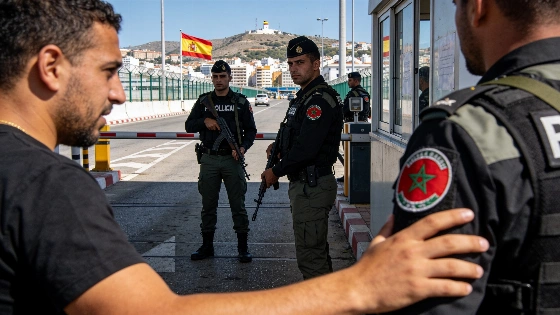
Spain’s response has been careful but notable. In 2022, Prime Minister Pedro Sánchez called Morocco’s autonomy plan the “most serious, realistic and credible” solution for Western Sahara. This was a change from Spain’s earlier ambiguity and came with a mutual promise to avoid unilateral actions that could provoke the other side. Still, as Moroccan ministers bring up Ceuta and Melilla—sometimes with King Mohamed VI present—Madrid faces renewed uncertainty over its North African territories. In August and September 2026, Spain again found itself in disputes with Morocco over Ceuta. Prime Minister Sánchez said Spanish authorities had no evidence that Moroccan officials planned or organized the border breach in Ceuta, citing a lack of confirmation from intelligence services and European institutions, as reported by The Guardian.
In September 2026, Denmark reaffirmed its support for Morocco's 'credible' autonomy plan for Western Sahara and welcomed UN Resolution 2797, aligning with a growing number of European capitals. Meanwhile, the Sahrawi side continues to highlight alleged human rights violations and refers to Morocco's presence in Western Sahara as 'occupation.'
The timing is deliberate. With legislative elections approaching and the Ceuta crisis back in the news, Morocco’s hardline factions seem ready to test their new diplomatic leverage. The recent migration surge in Ceuta, similar to the 2021 border incident when thousands crossed into Spain, has again put pressure on Spanish authorities. As reported earlier, Moroccan officials have openly challenged Spain’s position on Ceuta and Melilla. According to Morocco World News, the Spanish Foreign Ministry summoned the Moroccan ambassador after sharp statements about the enclaves, highlighting how quickly these disputes can escalate.
Morocco’s strategy also reaches beyond Europe. In Africa, Rabat has rejoined the African Union, opened dozens of consulates in Western Sahara cities, and invested heavily in banking, telecoms, and infrastructure across the continent. In Latin America, countries like Colombia have shifted their positions, recognizing Moroccan sovereignty over Western Sahara and freezing ties with the Polisario-backed Sahrawi Arab Democratic Republic.
Despite these advances, the Western Sahara dispute is still unresolved. The UN mission (Minurso) remains in place, and the option of a referendum on self-determination is still on the table. The Biden administration has not reversed Trump’s recognition, but has not taken further steps either, leaving the situation in diplomatic limbo. Talks involving Morocco, the Polisario Front, Algeria, and Mauritania have stalled, especially since the start of the Iran war.
For now, Morocco’s claims over Ceuta and Melilla are secondary to its main goal: gaining international acceptance of its control over Western Sahara. The current focus on the Spanish enclaves is heightened by the election calendar, not by a major change in Rabat’s priorities. Still, with US and Israeli support, shifting European positions, and a more confident regional approach, Morocco now has more leverage than ever.
This new mix of alliances and tactics marks a shift in North African geopolitics. Morocco’s willingness to use its partnerships and test the limits of international law has left Spain and the EU with fewer options and more uncertainty. The Western Sahara issue, once a frozen conflict, is now a test of how far diplomatic deals can change borders and power in the region. As Rabat continues to press its advantage, Spain faces the risk that the old rules no longer apply—and that the next crisis could come not from the desert, but from the gates of Ceuta and Melilla.