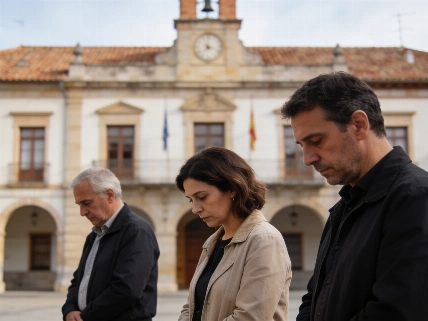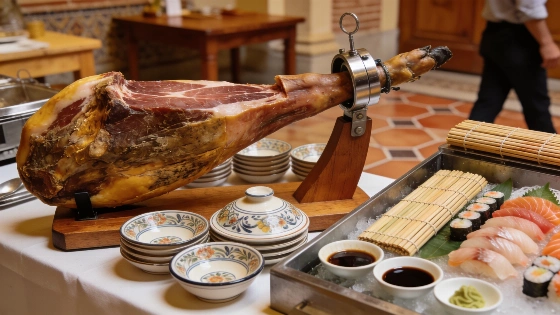
The public company Móstoles Desarrollo set an estimated ceiling of €880,000 over four years for catering at events, prompting debate over public spending. The proposed structure agreement covered high-end food stations, including sushi prepared on-site and jamón ibérico carved live by a professional. Councillor Ángeles García said the figure was an estimate for the structure, not a commitment to spend the full amount: the company would pay only for services ordered and delivered. The local government later withdrew the tender after the controversy became public.
The catering options included a jamón station with a minimum eight-kilogram piece of 50% ibérico acorn-fed ham, served by a specialist carver using professional equipment and presentation. The first carving service was capped at €800, excluding VAT, and each additional piece cost €600. Live sushi stations were priced at up to €17 per person and had to offer at least four varieties and three types, such as uramaki, nigiri and temaki, with Japanese-inspired presentation. Other stations offered ibéricos and cheeses at €13 per person, plus a dessert corner at €8. Both had minimum variety and quality requirements.
The proposed contract had four lots: breakfasts and brunches, appetizers and cocktails, seated lunches and dinners, and gourmet stations. The largest allocation went to appetizers and cocktails (€352,000), followed by lunches and dinners (€220,000), breakfasts and brunches (€176,000), and gourmet stations (€132,000). Companies could bid for one or all lots, with final spending tied to the services ordered during the contract period. Information from the city council, Móstoles Desarrollo spent around €20,000 a year on catering in 2024 and 2025.
García said the agreement was intended to cover events organized by Móstoles Desarrollo and possible future tourism-related activity. She said the tender was withdrawn so its scope could be adjusted to the public company’s actual responsibilities, after a proposed change to its corporate purpose failed to advance. The administration’s position was that the €880,000 ceiling did not mean the company would automatically spend that sum.
The opposition challenged the proposed ceiling’s scale and its fit with Móstoles Desarrollo’s economic-development role. PSOE representative Alejandro Martín argued that event catering did little to support local commerce or hospitality, accusing the municipal government of putting events ahead of substantive economic initiatives. In the political debate reported by Cadena SER Madrid Oeste on 22 October 2026, López Antequera criticized the contract’s management and the gap between routine catering spending and the much higher proposed ceiling. Machín disputed the government’s description of the sum as merely indicative. Vox’s spokesperson also argued that the Ayuntamiento was not obliged to cover catering costs for its activities and questioned whether premium services were appropriate for a company focused on employment and economic development.
The proposed catering procurement also came under scrutiny alongside wider questions about Móstoles Desarrollo, including dismissals at the public company and directors’ and officers’ liability insurance. The specifications drew attention for provisions such as live sushi preparation, professional ham carving and premium beverages. García linked the possible tourism-related work to a proposed expansion of the company’s corporate purpose, which did not proceed.
The original tender timetable gave catering companies until 14 September to submit bids. Price accounted for 40% of the evaluation, with the rest split between objective criteria and value judgments. Bidders for the gourmet stations could earn extra points for greater variety, higher quality or operational improvements. After withdrawing the tender, the administration said it would revise the procurement to reflect Móstoles Desarrollo’s actual competences.
Móstoles, in the Community of Madrid, is one of Spain’s largest municipalities and hosts institutional, business and training events. Structure agreements in Spanish public procurement set terms for potential orders over a defined period; the estimated ceiling alone does not promise purchases up to that value. Here, the withdrawal meant the proposed agreement would not proceed unchanged, while debate over its scope widened to the public company’s governance, employment decisions and spending priorities. The criticism followed the rejection of Móstoles Desarrollo’s 2025 accounts, which reportedly showed losses exceeding €224,000.