American Family Turns Down €22 Million for Land to Keep Farming. In the United States, a mother and daughter rejected an offer to sell part of their farm for €22 million. For them, the land is more than just an asset—it holds family history and provides food. Their decision has sparked interest in the conflict between agribusiness and tech development projects.
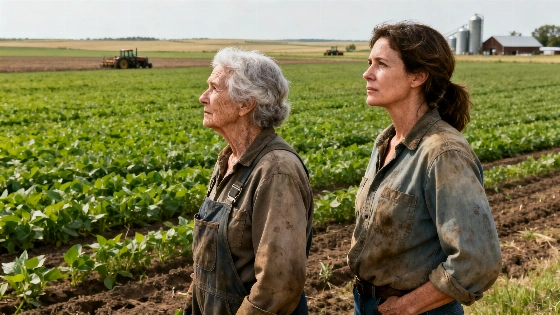
Ida Huddleston and Delcia Bare received an offer that most would not refuse: $26 million for part of their farmland near Maysville. However, for this family, land is not a commodity, but a way of life, which they are not willing to give up even for such a sum.
The farm, covering about 1,200 acres (roughly 486 hectares), has belonged to the family for several generations. Last spring, an anonymous company approached them with the intention to buy nearly half of the property to build a major data processing center. According to Delcia Bare, the offer exceeded the market value of the land by almost ten times: typically an acre here goes for about $6,000.
Family values versus big money
Delcia Bare explained her refusal simply: “Twenty-six million dollars means nothing if you’re talking about the family’s future and food security.” She recalled that their ancestors worked this land, paid taxes, and provided bread for people even during the Great Depression. For the family, it’s important not only to preserve tradition, but to continue supplying the country with food.
Her mother, 82-year-old Ida Huddleston, is also categorically against the sale. She does not believe the promises about new jobs and economic growth offered by representatives of tech companies. In her view, such projects could threaten the water supply and complicate field irrigation.
Technology and farming: a conflict of interests
According to Bere, the purchasing company acted through intermediaries and tried to negotiate with other landowners in the area. Some neighbors, it seems, are willing to consider selling, so a data center may still appear next to their farm.
The family fears that large-scale technology projects will increase water consumption and create risks for agriculture. “They call us old, foolish farmers, but we know what we're doing,” Delcia Bere emphasized. She compared her determination to Scarlett O’Hara from ‘Gone with the Wind’: as long as there is land and an opportunity to work, the family will never give up.
Context: pressure on agriculture
As Talent24h notes, in recent years, competition between the agricultural sector and technology companies for land and resources has been growing in the US and Europe. Data centers require large areas and significant amounts of water to cool equipment, leading to disputes with local residents and farmers.
The story of the Huddleston and Bere families is an example of how personal choice and commitment to tradition can outweigh financial incentives. At the same time, the situation remains unresolved: if the neighbors agree to sell, the technology project could still be carried out immediately adjacent to their fields.