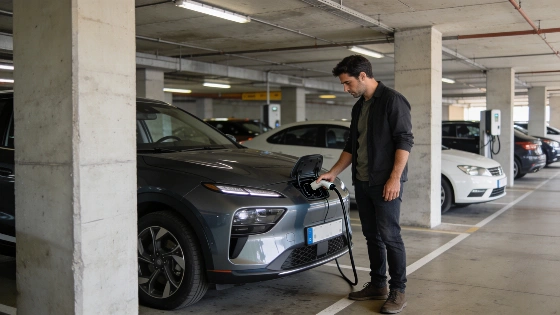
Plug-in hybrid sales are rising fast in Spain, but Nemo Reporter warns buyers to think twice if they can't charge at home. Real-world data shows these cars lose their main advantages without frequent charging and may end up costing more than expected.
Spanish automotive influencer Nemo Reporter is pushing back against the plug-in hybrid trend, warning that drivers who can't charge their cars regularly may end up paying more for less. His warning comes as Spain's PHEV market grows rapidly, with registrations up 36.4% and over 108,000 units sold so far this year.
Nemo Reporter points out a basic problem: plug-in hybrids only deliver savings and lower emissions if owners actually plug them in. Without regular charging, these cars run mostly on petrol, carrying extra weight and complexity that add cost but little benefit.
In August 2026, Spain registered 9,768 new plug-in hybrids, marking a 23.3% year-on-year increase, according to recent market data.
Official data supports this concern. The European Commission found that real-world CO₂ emissions from PHEVs registered in 2021 were on average 3.5 times higher than lab figures, mainly because drivers used electric mode much less than assumed in tests. This isn't just a technicality—it means many buyers aren't getting the environmental or financial returns they expect. According to a September 2026 analysis by the International Council on Clean Transportation (ICCT), the gap has grown for newer models: for PHEVs registered in 2023, real-world emissions were 4.6 times higher than test values, showing a growing disconnect as the fleet ages and user habits change.
Complexity is another issue. Plug-in hybrids combine a full combustion engine, a large battery, one or more electric motors, and external charging hardware. Nemo Reporter notes that this means inheriting the potential problems and maintenance costs of both petrol and electric cars. The latest J.D. Power quality study from the US reported 237 problems per 100 PHEVs in the first 90 days of ownership, higher than for battery electrics, conventional hybrids, or petrol models. Most issues weren't mechanical failures but glitches with infotainment, connectivity, or driver assistance systems—a reminder that not all reliability data is equal.
Price is another hurdle. The higher upfront cost of a PHEV only makes sense if the owner can maximize electric driving. For those who park on the street or don't have a home charger, the numbers quickly stop adding up. Even Spain's environmental "Cero" label, given to PHEVs with at least 40 km of electric range, doesn't guarantee real savings—especially if the car spends most of its time running on petrol.
ICCT research covering around 920,000 plug-in hybrids across the European Economic Area shows that the discrepancy between laboratory and real-world CO₂ emissions is not only widespread but increases as vehicles age and user charging habits change. This has prompted renewed debate in Europe about tightening CO₂ standards and reassessing assumptions about electric mode usage.
Some buyers are attracted by incentives, but these are shrinking. The new Plan Auto+ offers less generous support than earlier programs, and eligibility depends on technology, price, and other factors. Comparing sticker prices alone is misleading; buyers need to consider fuel, electricity, insurance, maintenance, financing, and resale value to understand the true cost.
For city dwellers in apartment blocks, legal barriers to installing a charger have eased. Spain's Supreme Court has confirmed that residents can set up a private charging point in their parking space without needing community approval, as long as they notify the building. But the practical challenge remains: without easy access to charging, the PHEV's main advantage disappears.
There are situations where a plug-in hybrid makes sense. Drivers with a home charger who mostly cover short or medium distances can run on electricity most days, using petrol only for longer trips. For everyone else, a conventional hybrid, efficient petrol car, or a full electric with enough range may be a better choice.
As reported earlier, the Spanish market is eager for electrified vehicles, but the details matter. Nemo Reporter's warning isn't a blanket rejection of PHEVs, but a reminder for buyers to do the math before choosing a technology that only pays off under the right conditions. The evidence is clear: plug-in hybrids deliver on their promise only when plugged in often. For everyone else, the supposed benefits are just a sticker on the windshield and a higher bill at the pump.