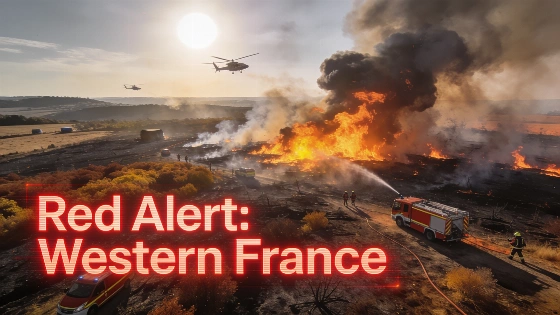
France escalates its heatwave response with nine western departments on red alert. Wildfires force evacuations in Drôme. Authorities restrict fireworks and alcohol sales as hospitals brace for continued high temperatures.
France is bracing for a prolonged and severe heatwave, with authorities placing nine western departments under red alert starting Friday. Météo-France has warned that nearly all of mainland France will be on orange alert by the weekend, as temperatures are expected to climb to 39–40°C in several regions. The departments affected by the highest level of warning include Morbihan, Ille-et-Vilaine, Mayenne, Sarthe, Loire-Atlantique, Vendée, Maine-et-Loire, Vienne, and Deux-Sèvres.
In the Drôme region, wildfires have already scorched approximately 3,500 hectares, prompting preventive evacuations in the western part of Saulon-la-Chapelle and a campsite on the Justin massif. Firefighting efforts involve 570 personnel, supported by Canadair and Dash aircraft as well as a water-bombing helicopter. The situation remains tense as emergency services work to contain the flames and protect local communities.
Local authorities are responding with a series of restrictions to reduce risks associated with the extreme heat. Several departments have banned fireworks and limited alcohol consumption in public spaces, aiming to prevent additional incidents during the period of heightened danger. In the Pyrénées-Orientales, the prefect has announced that nine previously closed communes will reopen from 18:00, reflecting a cautious improvement in local conditions.
The health impact of the heatwave is already being felt beyond France. Belgium has reported over 1,700 heat-related deaths since late June, marking the highest excess mortality ever recorded in the country for this period. In response, the French government has introduced emergency funding to supply hospitals with mobile air conditioning units. However, hospital unions have voiced concerns about the lack of practical details in the plan, questioning its effectiveness as the crisis continues.
Prime Minister Sébastien Lecornu is set to chair an interministerial crisis unit on Friday to coordinate the national response. The ongoing heatwave, combined with the risk of wildfires and strain on public health infrastructure, has led to reinforced vigilance across the country. The measures come as France prepares for the Bastille Day holiday, traditionally marked by public gatherings and celebrations, now subject to new restrictions due to the weather emergency.
Recent years have seen a rise in extreme weather events across Europe, with heatwaves becoming more frequent and intense. The current situation in France echoes challenges faced during other major events, such as the San Fermín festival in Spain, where emergency services have had to adapt to record temperatures and large crowds. For example, the start of San Fermín 2026 in Pamplona was marked by a heat alert and increased presence of emergency personnel, highlighting the growing need for coordinated responses to climate-related risks.
As the heatwave is expected to persist at least until July 14, French authorities continue to monitor the situation closely, urging residents and visitors to follow safety guidelines and remain alert to further updates.