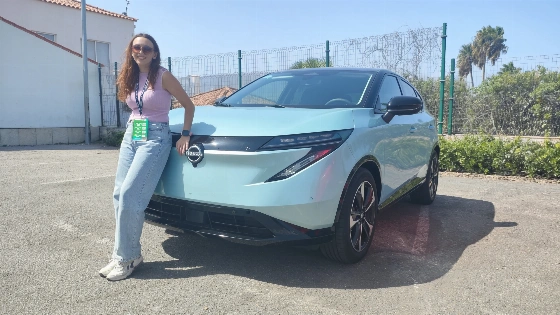
Nissan’s renewed Ariya brings a sharper front end and larger wheels to Spain’s electric SUV market, with a more refined cabin inside. Its maximum charging power, but, remains at 130 kW. For drivers planning long journeys, that unchanged speed is a impressive drawback.
Inside, the Ariya’s improvements are clear. The 12.3-inch multimedia system now features Google integration, making navigation and connectivity more smooth. A redesigned center console adds a larger lower tray with 3.2 liters of storage and a 15 W wireless phone charger. Plasma Green and Dark Red are new color options; the visual refresh also includes updated 19- and 20-inch wheels.
The Ariya’s strengths and weaknesses show up on the road. Tested on challenging mountain routes between Tejeda and Artenara, the SUV impressed with its stability in tight corners and suspension that absorbs rough surfaces more effectively. The braking response, but, feels slow for a vehicle of this size, requiring drivers to anticipate stops earlier. Energy consumption also exceeded the official WLTP figure of 18.4 kWh/100 km, surpassing 20 kWh/100 km during testing.
These factors matter in a segment where efficiency and charging speed often determine the winner. The Ariya’s 87 kWh battery promises more than 500 km of range on paper. Two versions are available: a 4x2 front-wheel lead with 242 CV and 525 km of autonomy, and a 4x4 with 306 CV and 509 km. Its 130 kW DC charging rate means longer stops than with competitors such as the Cupra Tavascan or Škoda Enyaq, whose charging technology has advanced further. Comparative reviews of fast electric crossovers for 2026 report that newer platforms and models offer significantly higher DC charging power. Rates of 150-240 kW and above are now considered standard for long-distance travel. The onboard charger remains at 11 kW, with bidirectional capability to charge external devices at up to 3.7 kW.
Pricing is another lever Nissan hopes will attract buyers. The Ariya starts at 59,350 euros before discounts and is available only in the fully equipped Evolve trim, with paint as the sole extra. That simplifies the buying process, but does not offset slower charging for those who prioritize road-trip convenience.
For Spanish drivers considering their next electric SUV, the Ariya’s comfort and range are genuine strengths, while its technology adds to the appeal. Yet, as reported earlier, charging speed and real-world efficiency are now central to the decision. Nissan’s updates bring the Ariya closer to its rivals in some respects, but the decision not to upgrade the charging hardware leaves it vulnerable in a market where every minute at the plug matters.
The refresh puts comfort and digital features ahead of technical breakthroughs. For those who rarely leave the city or value a well-appointed cabin, the Ariya remains a solid option. But buyers seeking the fastest charging and lowest consumption may find Nissan’s flagship lagging behind. As Spain’s electric SUV market accelerates, the Ariya will need a bolder step to lead the pack.