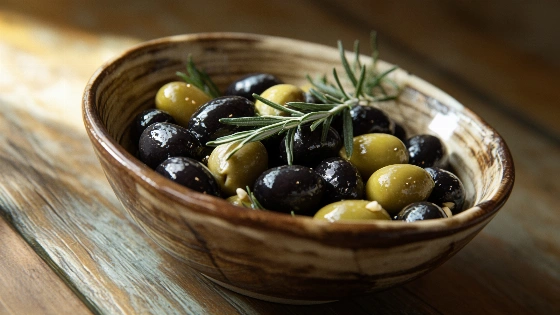
Spain’s olive oil market has posted fresh prices for extra virgin, virgin and lampante grades. With climate swings threatening harvests and production costs rising, the sector’s stability is under scrutiny as the country remains the world’s top exporter.
New olive oil prices landed in Spain on October 1, 2026. Producers saw the numbers and braced for more uncertainty. The latest rates for extra virgin, virgin, and lampante oils show just how much the sector is feeling the heat from wild weather and rising costs.
Infaoliva now lists extra virgin at 3.3 €/kg, virgin at 3.15 €/kg, and lampante at 3.1 €/kg. The Junta de Andalucía’s figures are a touch higher: 3.33 €/kg for extra virgin, 3.28 €/kg for virgin, and 3.18 €/kg for lampante. Almazaras Federadas de Córdoba has not released new prices. These aren’t just numbers. They set the pace for an industry that anchors Spain’s farm economy and shapes what the world pays for olive oil.
The official forecast for the 2026/27 campaign in Andalucía estimates olive oil production at 1,261,200 tons, making the region the main driver of Spain's national supply.
Spain leads the world in olive oil. The country produces 70% of the EU’s supply and 45% of the global total. More than half gets shipped abroad, reaching over 150 countries. Olive oil is Spain’s third biggest agri-food export. It keeps the trade balance positive and keeps rural towns alive.
Behind these stats is a huge network. Spain has 2.75 million hectares of olive groves. Of that, 2.55 million are for oil. These groves stretch across 15 of 17 autonomous communities. Andalucía is the giant, with 1.67 million hectares. Jaén alone makes about 37% of Spain’s oil. The sector supports over 350,000 farmers. It creates 15,000 industrial jobs and more than 32 million workdays each campaign. For many towns, olive oil is the backbone. Cooperatives keep these communities together.
But nothing is certain. The 2025 season brought drought and wild rain. Yields dropped. Producers felt the shock. Experts cited by Olive Oil Times expect the 2025/2026 campaign to shrink. The six top producing countries—Greece, Italy, Portugal, Spain, Tunisia, and Turkey—are forecast to make 2.65 million metric tons. Last year, they made 2.94 million. Still, this could beat the five-year average of 2.41 million tons if the weather holds. The International Olive Council (COI) puts global production for 2025/26 at about 3.3 million tons. Spain is set to deliver around 1.3 million. But the COI warns: summer heat and drought could change everything.
Officials are not waiting. The Ministry of Agriculture, Fisheries and Food (MAPA) has drafted a rule to let authorities pull olive oil from the market if a bumper crop threatens to crash prices below production costs. This tool will only kick in if forecasts and market risks are confirmed. The final order is still pending. Groups like COAG, UPA, and Asaja say the 2026/27 forecast looks realistic. But they stress that real output depends on October rain. They also point out that end-of-season stocks for 2025/26 should be about 370,000 tons.
Independent market reviews at the end of September 2026 suggest that, if the harvest is favorable, prices could fall to the 3.0–3.5 euro per liter range, reflecting a recent easing from the record highs seen in 2024.
Olive oil’s reach goes beyond money. Integrated production covers 477,606 hectares—57% of Spain’s total for this method. Another 217,864 hectares are certified organic. The sector shapes the land, the workforce, and daily life for millions. Now, its resilience is on trial. Climate swings and a jumpy global market are testing every part of the chain.
Spain’s farmers know upheaval. The recent surge in Chinese plug-in hybrid car sales shows how fast outside forces can shake up old industries. For olive oil, the stakes are high. Every price swing or poor harvest hits rural families and export markets hard.
The next harvest is up in the air. New rules could change the game. The latest prices send a clear message: Spain’s olive oil sector is still a pillar of the economy and a test of how well the country can handle climate and market shocks. The future depends on how the industry weathers these storms. The world is watching.