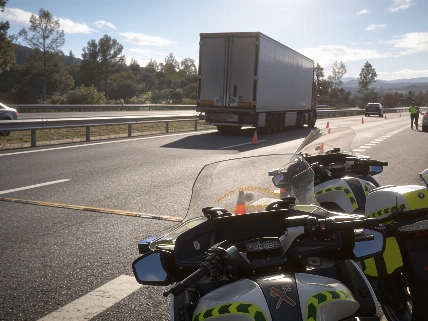
Rental car drivers in Andalusia have sharply increased their speeding this summer, even as the rest of Spain sees a dramatic drop. New telematics data reveals a regional spike in risky driving behaviors that bucks the national trend.
Rental car drivers in Andalusia are breaking the pattern seen across Spain. This summer, speeding incidents in the region jumped by 28.8%. The rest of the country moved the other way. Most regions saw a 40% drop in speeding compared to last year. These numbers come from Geotab, which analyzed data from more than 34,000 rental vehicles between June and August 2026.
Speeding dominated the telematics records. Over 37 million speeding events were logged nationwide. Other risky moves lagged far behind. Sharp turns topped two million. Sudden braking and seatbelt-related events each landed near 1.7 million. Abrupt accelerations passed 750,000. But Andalusia’s spike stands out. The region has a high concentration of rental cars and heavy summer traffic. That makes the surge even more striking.
As of October 1, 2026, Spain introduced new road safety rules that tightened requirements for overtaking and highway driving, providing crucial context for analyzing driver behavior during the holiday season.
“Andalusia is the region in which we have registered a higher volume of rental cars and trips during this summer period,” said Miguel Fayos, Geotab’s Vice President of Channels and Solutions, in an interview with Autoradio. He pointed out that Andalusia’s spike in speeding goes against the national trend. “In Andalusia, if we focus on the region, these events, unlike the rest of Spain, have increased. They have increased by 28.8%.”
Other parts of Spain show a different story. When adjusting for days of vehicle use, sudden braking dropped by 45%. Abrupt accelerations fell by 44%. Sharp turns went down by 42%. The biggest change came in seatbelt use. Incidents related to seatbelts dropped by 70%. In Andalusia, though, sudden braking and sharp turns both ticked up compared to last summer. The data points to a broader pattern of aggressive driving in the region.
Why is Andalusia different? Fayos warned against easy answers. He said unfamiliar roads might play a part. So could more traffic jams. “A sudden brake could be due to that, but it could also be because there were more traffic jams. There can be several factors,” he said. The study’s method matters too. These events reflect aggregated telematics data. They do not always mean a single infraction or a unique driver.
According to the Asociación Española de Renting de Vehículos, rental car fleets in Spain in 2026 achieved an average Euro NCAP safety rating of 4.56 stars for new passenger vehicles, surpassing the 4.43-star average of the broader market. This distinction highlights that the rise in speeding violations in Andalusia is more closely linked to driver behavior than to the inherent safety of the vehicles themselves.
There is one bright spot. Seatbelt compliance is up. Both across Spain and in Andalusia, seatbelt-related incidents have dropped since 2025. Drivers seem more aware. “Here we do see a general decrease, both in Spain and specifically in Andalusia, compared to 2025. It seems there are more conscientious drivers,” Fayos said.
Geotab’s analysis uses data straight from the vehicles. Some cars have built-in systems. Others use aftermarket devices to track GPS, acceleration, and more. Fleet managers use this information to understand how cars are used, plan maintenance, and improve safety. “What we and our clients want is to improve driver safety and reduce the number of collisions,” Fayos said.
Another finding stands out. Rental cars spent 20% of their engine-on time idling. That adds up to nearly 478,000 hours over three months. This idle time was tracked only in vehicles with valid engine data. It gives fleet operators another way to measure efficiency and plan maintenance.
Spain’s car industry is changing fast. New models and tech are reshaping the market. The recent test drives of the Leapmotor B10 in Zaragoza, as reported earlier, show how quickly things move. But Andalusia’s spike in risky driving proves that technology alone is not enough. Safer roads need more than new cars.
Andalusia’s outlier status is a warning. Rental companies and policymakers should take note. Most of Spain is moving toward safer driving. But the region’s surge in speeding and aggressive moves shows that local factors—like driver profiles or tourism—may be holding back progress. The next step is clear. Data must lead to action. Until then, the promise of safer roads remains out of reach.