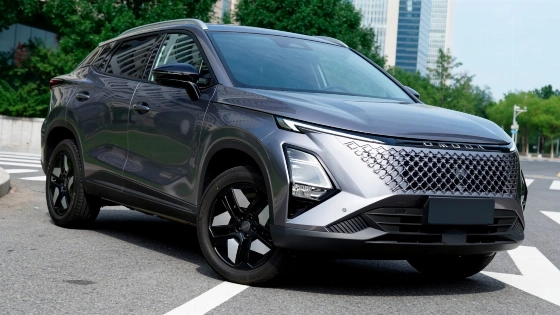
Omoda has quickly become a standout name among Chinese car brands in Spain. Here are seven lesser-known facts that reveal how this brand evolved from a Chery project to a major player on European streets.
When the Omoda 5 first appeared in Spanish dealerships, few could have predicted how quickly the brand would carve out a place in the European automotive landscape. Backed by Chery, Omoda’s journey from a product line to a standalone marque has been marked by bold decisions and a focus on global ambitions.
From Chery Line to Independent Brand
Omoda did not start as an independent company. It was introduced by Chery at the 2021 Guangzhou Auto Show as a new global product line, with the Omoda 5 as its debut model. Only in 2022 did Omoda become a separate brand under the Chery Group umbrella, a move that paved the way for its European expansion. This transition explains why early references to the Omoda 5 often included the Chery name, before the brand established its own identity.
Chinese automakers are no longer just competing on price — they are winning on design, technology, and speed to market.
A Name Chosen from 10,000 Ideas
Choosing the name Omoda was no small feat. Chery launched an international search, collecting over 10,000 suggestions from 30 countries before settling on the final name. According to the company, “O” draws from a Latin root meaning newness, while “MODA” refers to fashion and trends. Some interpretations also link the “O” to oxygen, symbolizing vitality and a fresh start.
Designed for the World
Unlike many Chinese models that were initially intended for domestic buyers, the Omoda 5 was conceived from the outset as a global vehicle. Chery engineered it to meet international safety standards and tailored it for markets across Europe, Australia, South America, and Southeast Asia. The development process moved quickly: just 18 months passed from the first clay model to the production line. The car’s T1X platform was designed to accommodate combustion engines, hybrids, and fully electric versions, reflecting a flexible approach to changing market demands.
More Than a Slogan
The Omoda 5’s design philosophy, called Art in Motion, is more than marketing language. Chery’s designers focused on dynamic shapes, interplay of light and shadow, and futuristic curves. The distinctive geometric grille and smooth lines have become hallmarks of the brand, carried over to new models as the lineup expands.
Electric Ambitions from the Start
Although the Omoda 5 launched with combustion engines, the brand’s electric ambitions were clear. In April 2023, Omoda unveiled the 5 e-QUA in Shanghai, its first electric variant. This model evolved into the Omoda 5 EV, offering 150 kW (204 hp) and a 61 kWh battery, with a range of up to 430 kilometers on a single charge. For a time, it was among the most affordable electric cars available in Spain. The Omoda 5 EV now shares the market with its combustion and hybrid siblings, including the Omoda 5 SHS-S, as the brand broadens its mechanical range for Spanish buyers.
Robotics Beyond Cars
Omoda’s parent company, Chery, has extended its technological reach beyond automobiles. Through its AiMOGA robotics division, Chery developed Mornine, a humanoid robot designed to interact with customers in dealerships. The company announced the sale of 220 units, highlighting the robot’s ability to recognize people, understand requests, and perform basic physical interactions autonomously.
Omoda and Jaecoo: Different Paths, Shared Roots
While Omoda and Jaecoo share commercial structures and dealerships in Spain, they were created for distinct market segments. Omoda targets the SUV and crossover market with a focus on design and trends, while Jaecoo positions itself as a more premium, off-road-oriented SUV brand. Despite their different images, both brands use the same platforms, engines, and technology. Their pricing overlaps, making it common for buyers to consider models from both brands when shopping for a new car.
Omoda’s rapid ascent mirrors broader changes in the European car market, where Chinese brands are increasingly challenging established players. The story of Omoda’s transformation from a Chery sub-brand to a recognized name on Spanish roads highlights how global strategies and local adaptation are reshaping the industry. For a look at how another car changed Spain’s automotive landscape, see this feature on the impact of the Opel Corsa on Spanish roads.