Oriol Junqueras will attend the Diada protest for the first time since 2021. His return comes amid internal shifts in Catalan independence groups. The event highlights renewed divisions and political stakes in the region.
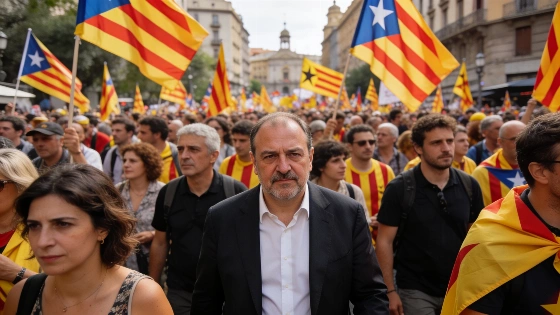
Oriol Junqueras, president of Esquerra Republicana, has confirmed he will participate in this year’s Diada demonstration on 11 September, marking his first appearance at the annual independence rally since 2021. The move breaks a five-year absence and signals a notable shift in the dynamics among Catalonia’s pro-independence forces, as the event remains a key indicator of public mobilization despite a decline from the peak years of the procés.
The demonstration, organized by Assemblea Nacional Catalana (ANC) and Òmnium Cultural, will take place across several Catalan cities. Junqueras’s decision follows a change in ANC leadership, which had previously maintained a confrontational stance toward Esquerra Republicana. The new direction has opened the door for Junqueras’s return, even as controversy grows over the expected presence of the far-right Aliança Catalana party at the protest. Junqueras stated that his party intends to be present at all relevant events, underlining a renewed willingness to engage directly with the independence movement’s grassroots.
His last participation in the Diada march was met with mixed reactions, reflecting internal divisions over Esquerra’s strategy of negotiating with the socialists. Under the leadership of Dolors Feliu and Lluís Llach, the ANC had criticized Esquerra’s approach and promoted anti-political rhetoric, leading to a boycott by Esquerra members in 2022. In 2023, Junqueras cited illness and adverse weather as reasons for his absence, while the event itself was marked by the prominent appearance of Sílvia Orriols from Aliança Catalana.
The ANC’s current president, Josep Vila, has avoided explicitly banning Aliança Catalana from the demonstration, though he has emphasized the organization’s commitment to human rights and its focus on social rather than political fronts. This position has drawn criticism from other groups, such as the CUP, which threatened to withdraw unless a clear stance was taken against xenophobic participation. The debate over who is welcome at the Diada reflects broader tensions within the independence movement, as new political actors challenge established parties for influence.
Recent polling suggests a significant rise in support for Aliança Catalana, which now holds two seats in the Catalan Parliament but is projected to compete closely with Esquerra Republicana for the position of second-largest party. This shift has forced both Esquerra and Junts to reconsider their strategies, especially as Junts has also faced criticism for its own negotiations with the Spanish government. The Diada demonstration is expected to serve as a public test of strength for these competing factions and their ability to mobilize supporters.
This year’s protest will be held under the slogan “Hi sóc. Hi som. Independència” and will feature decentralized events in Barcelona, Girona, and Amposta. In Barcelona, two columns of demonstrators will converge at Plaça Catalunya, reflecting a new approach to organizing the event. The evolving landscape of Catalan independence politics was also highlighted in a recent report on efforts to restore unity among pro-independence groups.
For context, the Diada has long served as a barometer of the independence movement’s vitality and public support. While turnout has fluctuated in recent years, the event remains a focal point for political expression and internal debate. The inclusion of parties with anti-immigration platforms has added new layers of controversy, challenging the movement’s traditional boundaries. As Catalonia approaches another Diada, the participation of figures like Junqueras and the response of rival groups will be closely watched for signs of shifting alliances and future strategies.