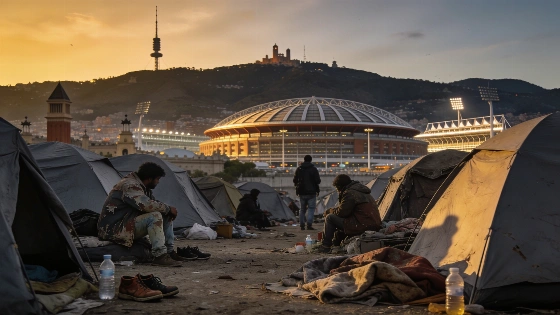
More than 200 people now live in makeshift camps on Montjuïc. Drug use, lack of shelter, and minimal support have turned the area into a visible crisis. City efforts have failed to resolve the growing emergency.
Barcelona’s Montjuïc mountain, known for its iconic landmarks, has become the site of a deepening humanitarian crisis. Over 200 people, many battling addiction and extreme vulnerability, now live in tents scattered across the area. The city’s latest count in May revealed a sharp rise in makeshift camps, with most residents hidden from view but increasingly visible to locals and tourists alike.
Authorities admit that the situation in Montjuïc is unlike other homelessness cases in the city. The combination of drug use, petty crime, and lack of basic hygiene has overwhelmed municipal services. Many of those living here, including migrants like Ibrahim from Senegal, have cycled through shelters, prisons, and the streets before ending up on the mountain. Some, like Ibrahim, have suffered violence and lost contact with social services due to the instability of their living conditions.
Women are a minority in these camps, with most settlements being almost exclusively male. Two women from the Raval district described daily police checks that often result in their belongings being discarded if they are absent. The city’s Civitas operation, run by the Guardia Urbana alongside social and cleaning services, aims to prevent permanent camps by identifying residents and offering referrals. However, the distinction between personal property and waste often sparks conflict, and the camps persist despite daily interventions.
Social organizations such as Bienestar y Desarrollo ABD and Assis have tried to build trust by distributing harm reduction supplies like glass pipes and clean syringes. According to ABD, many residents are part of the LGTBI community, some of whom fear rejection due to their sexual orientation or religious background. The lack of tailored municipal facilities leaves these groups especially exposed.
Health risks are high. BCN Checkpoint, a community center for HIV and STI detection, launched a pilot program two years ago after identifying between 200 and 500 vulnerable people in Montjuïc, including sex workers and those engaging in chemsex. The center now trains teams to provide early diagnosis and access to healthcare, but most residents remain without regular medical support.
Glòria Martínez from Assis notes that many camp residents avoid available shelters due to strict rules and bans on substance use. Their isolation makes it difficult for outreach teams to maintain contact, and mental health issues are widespread. The city’s social services, led by Sonia Fuertes, coordinate daily with the homeless to encourage them to pack up their belongings each morning. Special teams from the Barcelona Public Health Agency provide harm reduction tools, but the number of people living rough in Montjuïc and across the city continues to grow.
Social researcher Percy Fernández highlights that the area has become a hub for drug use, including newer substances like "monkey" (so-called zombie drug), and that many residents survive through scavenging, petty trade, and prostitution. The lack of consistent outreach leaves them largely unsupported. Bea Fernández of Fundación Arrels links the rise in Montjuïc’s homeless population to municipal crackdowns elsewhere, pushing people to seek more hidden locations.
Barcelona’s homelessness crisis is not isolated. The city counted 2,171 people sleeping outdoors in May, with 660 in the Sants district alone. Montjuïc now accounts for a significant share of this population. The situation is further complicated by the city’s ongoing struggle with extreme weather events, as seen when Granada faced severe wind and muddy rain during a recent heatwave, highlighting the vulnerability of those without stable shelter.
Montjuïc’s crisis underscores the limits of current policies and the urgent need for more effective, coordinated action. The mountain’s proximity to major tourist attractions contrasts sharply with the daily reality faced by its most marginalized residents. As the camps persist and the population grows, the challenge for Barcelona’s authorities and social organizations remains unresolved.
Homelessness in Spain has been rising in recent years, with economic pressures, housing shortages, and migration flows contributing to the problem. Barcelona, as a major urban center, faces particular challenges due to its high cost of living and limited affordable housing. The city has implemented various initiatives, including emergency shelters and harm reduction programs, but the scale and complexity of the Montjuïc situation reveal significant gaps. The presence of vulnerable groups, such as migrants and LGTBI individuals, further complicates outreach and support efforts. Addressing the crisis will require sustained investment, cross-sector collaboration, and a focus on both immediate relief and long-term solutions.