Granada is bracing for a sharp weather change this Wednesday. Meteorologists warn of possible downbursts and muddy rain, with wind gusts that may exceed 100 km/h. The alert comes during the region’s third major heatwave.
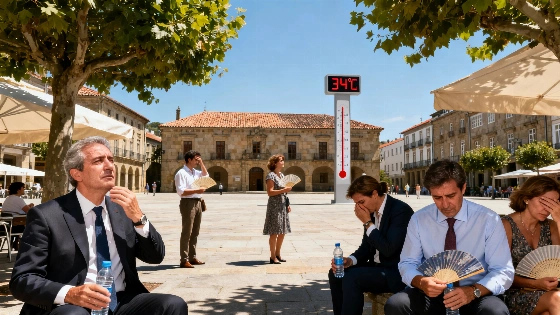
Granada is set for a dramatic weather shift this Wednesday as meteorological services warn of sudden downbursts and muddy rain, breaking the pattern of persistent heat that has dominated the region. The alert comes as the city endures its third major heatwave of the summer, with daytime highs reaching 41°C and tropical nights barely dropping below 23–24°C. According to Meteored, a combination of a shortwave disturbance at altitude, intense surface heating, and converging winds will create the right conditions for rapid cloud development over the southeastern interior during the afternoon.
While significant rainfall is not expected, any precipitation is likely to be mixed with Saharan dust, resulting in muddy rain that can affect visibility and leave residue on vehicles and buildings. High-resolution weather models cited by Meteored indicate a strong likelihood of localised windstorms and downbursts, with gusts potentially surpassing 90–100 km/h. Such winds carry the risk of material damage, prompting authorities and residents to monitor the evolution of afternoon storms closely.
The phenomenon known as a downburst, or "reventón" in Spanish, is associated with violent downdrafts during thunderstorms. When these powerful air currents hit the ground, they spread outwards in all directions, generating intense, radial wind gusts. The most severe downbursts can reach speeds over 120 km/h and are sometimes mistaken for tornadoes due to the extent of the damage they cause. Meteored highlights that the unique topography of Granada and the current atmospheric setup increase the risk of such events today.
This sudden weather threat comes as Spain continues to grapple with extreme summer conditions. Earlier this month, the impact of record-breaking heat on major events was evident when the Tour de France had to shorten stages and introduce special cooling measures for athletes, as detailed in coverage of the Tour de France’s response to the heatwave. The situation in Granada underscores how quickly weather patterns can shift, even during prolonged periods of high temperatures.
Downbursts are particularly hazardous because they can occur with little warning and are capable of causing significant disruption to transport, infrastructure, and daily life. In regions like Granada, where summer heatwaves are becoming more frequent and intense, the combination of Saharan dust and sudden storms presents unique challenges for local authorities and residents. Understanding the mechanics of these phenomena is crucial for preparedness, especially as climate variability continues to influence weather extremes across southern Spain.