Pedro Sánchez has brought Spain’s general election forward to 29 November after Congress rejected two housing decrees. The vote exposed the coalition government’s weak grip on parliament after months of pressure.
Congress rejected two housing decrees on 2 October, with Junts joining PP and Vox against the government. The first vote ended 178 to 172. The second ended 184 to 166.
Pedro Sánchez had spent the weekend weighing whether to keep governing or call an early election. He chose the ballot after the defeats showed how hard it had become to build a working majority.
Junts played a decisive role in the defeat. The Catalan separatist party joined PP and Vox in rejecting the measures, with the first decree losing by 178 votes to 172 and the second by 184 to 166.
The election date is set.
Before the vote, Sánchez's office said no final decision had been made on bringing the election forward. The possibility was already under discussion inside PSOE and the government. After the defeat, Sánchez spoke with ministers and PSOE leaders about the next step.
The immediate trigger was legislative. The two decree-laws were presented as a response to Spain's housing crisis. Negotiations continued until the final hours, but the government still lacked enough support to pass them.
The first decree included protections against evictions for vulnerable tenants, measures affecting speculative purchases and provisions for the rental market. The second would have introduced automatic extensions for rental contracts. The rejection was later formally recorded in Spain’s Official State Gazette for royal decree-laws 26/2026 and 27/2026.
The BOE later recorded the rejection of royal decree-laws 26/2026 and 27/2026. The first package covered protections for vulnerable tenants, speculative purchases and the rental market. The second included automatic extensions for rental contracts.
The loss followed months of pressure on the coalition. Government measures have often depended on vote-by-vote deals with parliamentary partners. Reuters and the BBC described the housing defeat as further evidence that Sánchez lacks a dependable majority and must negotiate with different parties each time.
That pressure grew.
Judicial cases involving people close to the PSOE leadership gave the opposition another line of attack. Each case added to the political strain. Each congressional vote also became harder for the government to absorb.
Migration brought another confrontation. At the end of July, Ceuta faced unprecedented pressure when tens of thousands of migrants crossed the border from Morocco. The arrival forced the government to deploy extraordinary resources. Weeks later, authorities declared for the first time in democracy a situation of interest to national security to improve coordination between administrations.
Partido Popular and Vox said the government had reacted too late. They also challenged its policy towards Morocco. Sánchez defended the security forces and his government's response. The Ceuta crisis joined the judicial cases and congressional defeats as another source of pressure before the election was called.
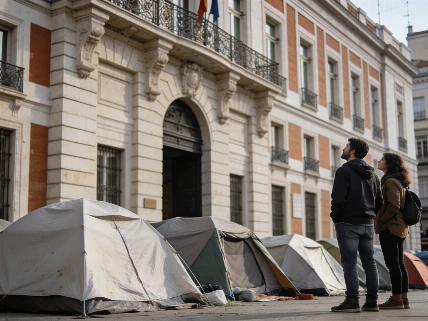
Housing remains one of Spain's sharpest public concerns. The crisis has driven tenant protests and made affordability a national political issue. The rejection of the decrees came during that wider dispute.
Opposition leader Alberto Núñez Feijóo had called for elections as soon as possible. He said the PP was ready for the campaign. His comments added pressure after the congressional vote.
The 29 November election will decide more than the fate of two housing decrees. It will show whether Sánchez can regain enough political and parliamentary support to govern. For months, his administration has relied on shifting agreements and faced repeated defeats.
The housing vote exposed the limit of that approach. Without dependable support in Congress, the government cannot turn its priorities into adopted measures. The defeat did not create the weakness. It made the weakness impossible to hide.