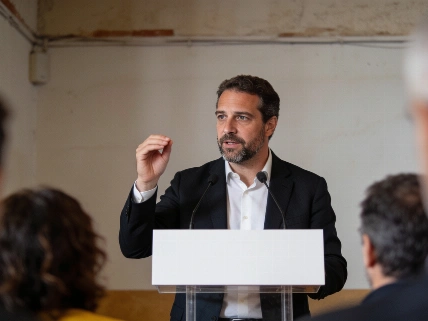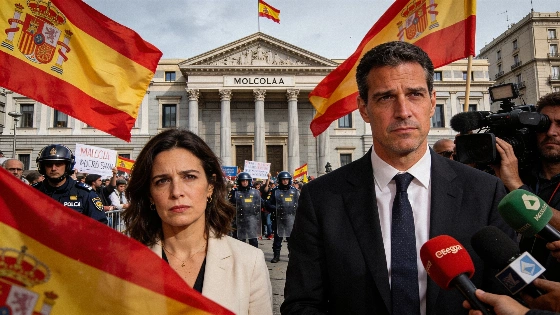
Spain’s Prime Minister Pedro Sánchez is facing one of the most challenging periods of his tenure as legal cases involving close family members intensify political tension in Madrid. On 14 July 2026, the Audiencia Provincial de Badajoz convicted his brother, David Sánchez, over his appointment to a post at the Diputación de Badajoz. The court imposed nine years of special disqualification from public employment and standing for elected office, not a prison sentence. It found him a necessary participant in an administrative prevarication offense concerning a position created in 2017 and later adapted to his circumstances, while rejecting a separate influence-peddling allegation.
The judgment is not final. Both the defense and prosecutors appealed, and the case is pending before the Tribunal Superior de Justicia de Extremadura, with a further appeal potentially available to the Tribunal Supremo. The Fiscalía sought David Sánchez’s acquittal, arguing that “there is not sufficient evidence to maintain the conviction.” Pedro Sánchez has defended his brother, saying he was being condemned “for being the president of the government’s brother.” The competing positions show that the first-instance ruling remains subject to appellate review.
On 21 September 2026, Sánchez’s wife, Begoña Gómez, was sent to trial in Madrid over allegations of influence peddling and misuse of public funds. The case concerns activities connected with a chair at the Universidad Complutense de Madrid and the work of an aide at La Moncloa. Madrid’s appeals court had narrowed the proceedings by dropping allegations involving business corruption and misappropriation of private funds. Prosecutors and Gómez’s defense are seeking her acquittal; no trial date had been set in the cited reporting. The order sending her to trial is not a conviction.
The two cases involve distinct allegations: David Sánchez’s concerns public-sector recruitment at the provincial government of Badajoz, while Gómez’s concerns alleged influence and public-funds issues connected with university and Moncloa-related activities. Neither case, as described in the proceedings, identifies Pedro Sánchez as a suspect. The different legal stages, a non-final conviction in his brother’s case and a trial order in his wife’s, matter when assessing the developments.
Reports describe an increasingly uneasy atmosphere inside the Moncloa Palace, Spain’s prime ministerial residence and workplace. The legal developments have affected Sánchez personally and intensified scrutiny of his administration. His decision to take a five-week vacation amid these events has further fueled debate about the government’s ability to manage ongoing challenges. The proceedings have sharpened political pressure, but their legal outcomes remain pending and their political consequences are separate from any formal change in government.
The timing is particularly sensitive. The cases have drawn renewed attention to pressures facing the prime minister and his inner circle as the governing coalition navigates continuing political challenges. The immediate legal milestones are appellate review of David Sánchez’s conviction and the scheduling and conduct of Gómez’s trial.
Political observers say the crisis is unfolding against a backdrop of previous controversies and internal party tensions. In recent months, Sánchez has navigated complex issues within his own party, including leadership debates and internal scrutiny. His handling of diplomatic and domestic challenges has also drawn attention, including his efforts to restore relations with Algeria following a policy shift on the Sahara, detailed in this report on efforts to secure a gas agreement.
The government’s response will shape the political debate in the coming months, as supporters and critics watch for signs of ability to recover or further instability. The pending court proceedings and the administration’s ability to maintain focus on national priorities will remain basic to scrutiny of Sánchez’s leadership.
The Moncloa Palace is the official residence and workplace of Spain’s prime minister. Legal cases involving family members of high-ranking officials can carry impressive political repercussions, intensifying public attention to government actions and decision-making. The current episode highlights the delicate balance between personal and political spheres at the highest levels of power.