Pedro Sánchez addressed Congress to counter accusations of systemic corruption in his administration. He argued that the cases are isolated and defended the government's response. The debate highlighted deep divisions over political accountability.
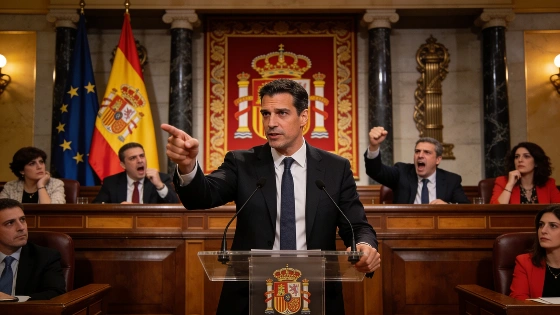
Pedro Sánchez used a tense session in Congress to push back against mounting allegations of widespread corruption within his government. The Prime Minister insisted that the recent scandals linked to the PSOE are limited to a small group of individuals who have already been expelled from the party. He argued that attempts to portray the entire administration as corrupt are unfounded and serve only to create a false public perception.
During his address, Sánchez detailed the main cases that have put pressure on his government, including those involving José Luis Ábalos, Koldo García, Santos Cerdán, and Leire Díez. He emphasized that these incidents are not representative of the broader PSOE or its leadership. According to Sánchez, the party responded by removing those implicated, cooperating fully with law enforcement, and implementing new internal controls. He stressed that he had no prior knowledge of the offenses and would never have tolerated such actions.
Sánchez also drew a sharp distinction between the current cases and the so-called 'Zapatero case,' which he described as still in its early stages and lacking clear evidence. He defended the handling of the Plus Ultra airline rescue, asserting that it was conducted properly and that former Prime Minister Zapatero, who has not held public office for 15 years, deserves the party's trust.
The Prime Minister used the opportunity to criticize the opposition, particularly the PP and Vox, accusing them of hypocrisy given their own history of corruption cases. He pointed out that the opposition parties face more than 50 open cases with 150 individuals under investigation. Sánchez argued that, unlike his government, the opposition has not taken comparable steps to address corruption within their ranks.
Anticipating further negative headlines, Sánchez warned that the right would continue to use new revelations to undermine the government. He acknowledged public frustration with the constant stream of corruption news but insisted that not all politicians or parties are the same. He contrasted his administration's policies with those of previous governments, highlighting differences in employment, social welfare, and public investment.
Corruption scandals have long been a source of political tension in Spain, often leading to resignations and shifts in public trust. The PSOE has faced scrutiny in the past, but so have other major parties, including the PP. Spanish law requires public officials to step down if formally charged with certain offenses, and recent years have seen a tightening of anti-corruption measures. The current debate reflects ongoing challenges in restoring confidence in political institutions and ensuring accountability at all levels of government.