A violent clash between antifascist groups and Aliança Catalana supporters forced police to intervene during Barcelona's Diada. The incident overshadowed the celebrations and sparked debate over political divisions and public safety.
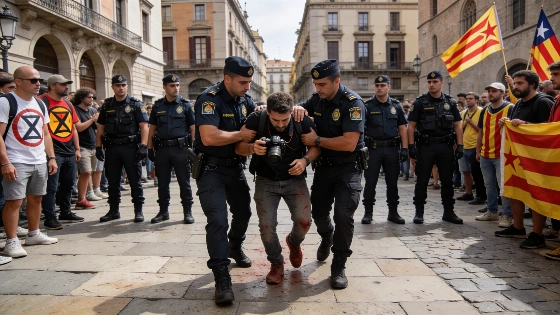
Barcelona’s Diada was disrupted when violence broke out between antifascist groups and supporters of Aliança Catalana at the Fossar de les Moreres. Police intervened, and a photojournalist was injured in the chaos, casting a shadow over the city’s annual tribute to Rafael Casanova.
The confrontation took place in the Born district, where about 500 Aliança Catalana supporters were met by roughly 2,500 antifascist demonstrators, according to the Guardia Urbana. Mossos d’Esquadra used force to keep the situation from escalating further. Police had cordoned off the area in advance, following similar tensions at the Fossar in previous years, as part of a preemptive strategy.
Mossos d'Esquadra reported three arrests and five to six additional individuals under investigation for incidents related to the unrest at Fossar de les Moreres.
Political leaders called for unity, but the divisions were clear. The Govern, Parliament, and Barcelona City Council all spoke about the need for an inclusive Catalan identity, but only the Comuns directly addressed the violence, noting that this year’s clash was more intense than in the past. Junts accused Salvador Illa of fueling polarization to distract from what they called his administration’s poor performance.
Security measures drew criticism from both the Comuns and the CUP, who said Mossos d’Esquadra had been too lenient with the far-right group. Jéssica Albiach, representing the Comuns, argued that the state should protect rights and counter extremism, not hinder those fighting against it. The CUP’s Su Moreno went further, alleging cooperation between police and Aliança Catalana and suggesting the government had cleared the way for the group’s demonstration. The Aliança Catalana event, which included a floral offering, had been officially requested in advance, and police acted to keep the groups apart, according to several sources.
While most parties stayed silent on the police response, some politicians publicly supported Jordi Borràs, the photojournalist injured during the floral offering. Official speeches focused on coexistence and resisting divisive rhetoric, with Sílvia Paneque and Jaume Collboni both stressing the need for an open, democratic Catalonia in the face of rising xenophobia.
The incident at Fossar de les Moreres was not an isolated event: similar confrontations had occurred the previous year, prompting authorities to reinforce police presence in 2026 as a precaution. This escalation has led to increased public debate about the safety of mass gatherings and the protection of journalists, as highlighted by multiple news outlets.
References to the historic Diada in Sant Boi de Llobregat fifty years ago were echoed by Lluïsa Moret and Josep Rull, who said Catalonia’s strength comes from its collective ambition and refusal to be defined by origin. Still, both Junts per Catalunya and Esquerra Republicana used the occasion to criticize Illa’s government, arguing that a lack of national ambition and failures in security and language policy have left the region exposed to reactionary forces.
Jordi Turull of Junts accused the executive of undermining Catalan nationhood and using polarization to cover up mismanagement. Elisenda Alamany of Esquerra Republicana warned that these weaknesses are creating opportunities for those who want to divide society and weaken Catalonia’s identity.
This year’s Diada was marked by violence and political tension. The rapid escalation in Barcelona highlighted how fragile the current consensus is, and how easily symbolic events can become flashpoints for deeper conflicts. As parties trade blame and police tactics are questioned, calls for unity sound increasingly strained. The events at Fossar de les Moreres show that Catalonia’s debates over identity, security, and political direction remain unresolved, and that unity will require more than speeches.