A crowd in Ceuta smashed a local deputy’s car, mistaking it for activists’ as tensions over migration and politics boil over. Police used smoke grenades and made arrests in a city on edge.
Broken glass and panic hit Ceuta’s port on Sunday night. A mob surrounded the car of Julia Ferreras, a deputy from Ceuta Ya!, outside the maritime station. The crowd thought her car belonged to activists from the Navarrese NGO Negu Gorriak. Ferreras and her group—human rights lawyers and activists—were trapped. Protesters smashed windows, threw stones and eggs, and climbed onto the car. The people inside feared for their lives.
The attack came as anger over migration and activist groups reached a peak. Protesters, organized online with slogans against “radical groups,” gathered to block Negu Gorriak / Derecho a Techo. They accused the group of being “proetarra” and wanted them out of Ceuta. Negu Gorriak had announced plans to give humanitarian aid and watch for alleged violence against migrants by authorities. This sparked local fears and drew a crowd waving Spanish and Ceuta flags to the port—just steps from makeshift camps where more than 1,700 people are staying.
Police fired warning shots into the air to disperse the crowd at Ceuta port, as reported by several Spanish media outlets.
Ferreras said the violence started when her companions were picked out in the crowd. As she tried to get them out, the mob mistook her car for the activists’. Attackers broke both front and rear windows, tore off a mirror, and hit the car’s body. Those inside ducked for cover. Ferreras said she told the crowd she was a local deputy, but they ignored her. National Police stepped in, pulling the group out with a fast reverse under escort.
“We were terrified. I thought we wouldn’t get out alive. They came to lynch us,” Ferreras told Cadena SER. She said many attackers were people she knew from her own neighborhood. Ferreras called for an end to political incitement and blamed the local right for stirring up unrest: “The right is encouraging this. Our president keeps calling people invaders, day after day, creating a climate of insecurity and unease.”
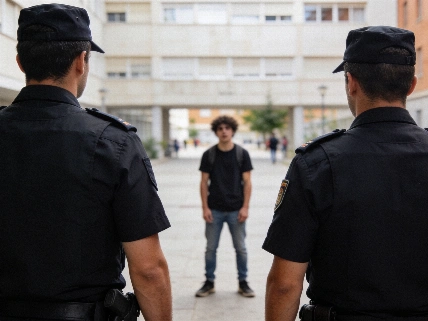
Police also faced anger from the crowd. Some called officers “sanchistas” and slammed their response. Riot police used smoke grenades and fired warning shots to clear the area near Casa del Mar. At least two people were arrested for public disorder and property damage. The police union SUP criticized the lack of preparation. They said authorities had plenty of warning about the protest and the city’s tense mood, but frontline officers were left to deal with the fallout.
According to reports from RTVE and El Mundo, Julia Ferreras filed a formal complaint with the police after her car was attacked, and the leader of Ceuta Ya! publicly confirmed the damage and the submission of the complaint. No further official decisions or criminal consequences have been reported as of the latest updates.
Even after dark, groups stayed at the port’s entrances. They checked cars arriving from Algeciras and kept up pressure on the city’s southern border. This comes as Ceuta deals with the aftermath of a mass arrival of migrants at the end of July. Thousands are still stuck in temporary camps or on the streets. The government says between 9,000 and 10,000 migrants remain in the city, with 3,000 to 4,000 still without shelter.
Interior Minister Fernando Grande-Marlaska is set to visit Ceuta’s Temporary Attention Center for Foreigners (CATE), where officials are sorting cases for asylum or expulsion. He will also visit police and Guardia Civil units and the city’s asylum office. Authorities are trying to handle both the humanitarian and security problems caused by the ongoing crisis.
The political fight is getting sharper. The central government and the local administration led by Juan Jesús Vivas and the PP are openly clashing. Most recently, police advised against holding a Spain-Mexico U20 football match in Ceuta because of “migratory pressure” and “social tension,” so the match was moved. The port’s temporary shelter is another flashpoint. The police union SUP tried to stop its operation on security grounds, but the National Court refused. Last Friday, 1,700 people were housed there.
Ceuta’s social fabric is wearing thin. The attack on Ferreras’s car shows how raw nerves and political divides are tearing at the city. This was not a one-off. It’s a sign of a city gripped by fear, rumors, and political games. Neighbors turned on neighbors. Police had to act fast to stop worse violence. Trust and order are breaking down. As reported earlier, national leaders are under pressure for how they are handling Ceuta’s crisis. The city’s future now depends on whether authorities can bring back calm and trust before things get worse.