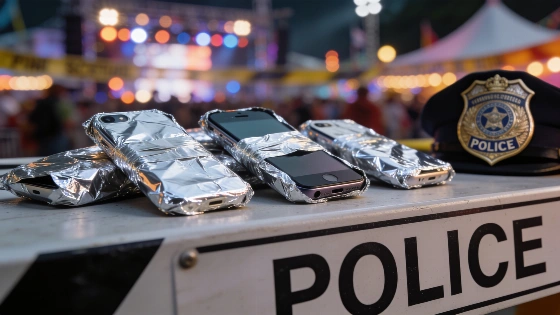
Spanish police at the Pirata Beach Festival in Gandía discovered a suspect carrying a dozen smartphones wrapped in aluminum foil. This low-tech method can temporarily block GPS, mobile, WiFi, and Bluetooth signals, making it harder to track stolen devices. Experts warn the technique is not foolproof.
During a recent police operation at the Pirata Beach Festival in Gandía, officers found a suspect carrying twelve smartphones, each carefully wrapped in aluminum foil. According to reports from Levante and Europa Press, this simple kitchen staple was being used as a makeshift shield to prevent the devices from being tracked or detected after theft.
The method relies on a well-known physical principle: when a device is completely enclosed in a conductive material like aluminum, it forms a basic Faraday cage. Hervé Lambert, global consumer operations manager at Panda Security, explains that this barrier can significantly weaken or block the electromagnetic waves that smartphones use to connect to mobile networks, GPS satellites, WiFi, and Bluetooth. As a result, the wrapped phones become almost invisible to tracking systems and lose their ability to communicate with the outside world.
How the Foil Barrier Works
The Faraday cage effect, named after British scientist Michael Faraday who described it in 1836, is created when a conductive material surrounds an object, shielding it from certain electromagnetic fields. In practice, wrapping a phone in aluminum foil can disrupt the signals it needs to function, including those used for location tracking and wireless communication. This makes it harder for authorities or owners to locate stolen devices in real time.
However, the effectiveness of this technique depends on how thoroughly the device is covered. Any gaps or loose wrapping can allow signals to leak through, especially in areas with strong network coverage. The method is cheap, lightweight, and easy to use, which explains its appeal among thieves looking to delay detection.
Limitations and Risks
Despite its popularity, the aluminum foil trick is far from foolproof. If the wrapping is imperfect or removed, the phone can quickly reconnect to networks and update its location. Commands sent by the owner—such as activating lost mode, locking the device, or erasing data—may be executed as soon as the phone regains connectivity. In some cases, this delay can buy time for the thief, but it also creates a window for recovery if the device is later found or the foil is discarded.
Experts caution that while foil can slow down tracking, it does not guarantee total isolation. The method is best seen as a temporary obstacle rather than a reliable shield against modern security features.
What to Do After a Phone Theft
If your phone is stolen, the first step is to report the theft to the National Police or Guardia Civil. You will need the device's IMEI number, which can usually be found on the original box, purchase receipt, or your mobile operator's account page. It's also important to ask your carrier to block the SIM or eSIM card to prevent unauthorized use.
Android users can use the Find My Device service from another device to locate, lock, or erase their phone remotely. If the phone is offline, these commands will be carried out once it reconnects. For iPhone owners, Apple recommends activating Lost Mode and keeping the device listed in the Find My app. Removing it from the list disables activation lock and can make it easier for thieves to reset and resell the phone. Even after a remote wipe, the device should remain linked to Find My for maximum security.
While the aluminum foil method can complicate immediate recovery, it rarely prevents eventual tracking if the thief is careless or the device is unwrapped. The incident in Gandía highlights both the creativity of criminals and the ongoing need for vigilance and quick action when a phone goes missing.