Spanish police unions accuse Interior Ministry leaders of political interference. Senior officers allegedly resisted pressure to sign a report exonerating Morocco over the Ceuta border incident. Calls for resignations intensify as the controversy grows.
Spanish police unions are demanding immediate explanations from Interior Minister Fernando Grande-Marlaska after reports surfaced that senior officers were pressured to approve a document clearing Morocco of responsibility for the Ceuta border crisis. The unions warn that if these claims are confirmed, the leadership of the National Police could lose credibility and resignations should follow.
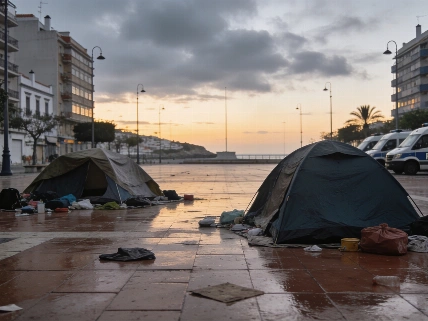
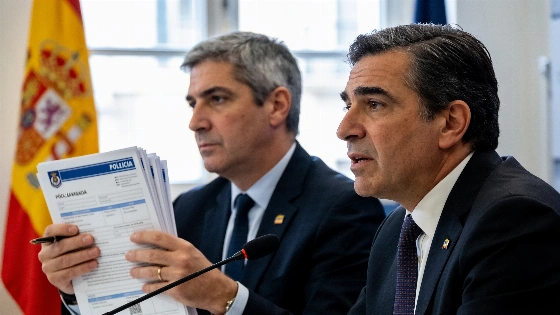
The dispute centers on a report about the events in Ceuta on July 30 and 31, when thousands crossed the border in what officials called an invasion. According to ABC, several high-ranking officers in the Extranjería unit, led by Julián Ávila, refused to sign a document that would have denied prior warnings and absolved Morocco of any role. This request reportedly came after a meeting involving Ávila, Javier Susín (head of Information), Deputy Director José Luis Santafé, and Director General Francisco Pardo Piqueras. The Interior Ministry has stated there is "no police report" directly blaming Moroccan forces for planning or carrying out the events, though debate continues within the police leadership.
In early September, it was revealed that the CENIF police unit submitted material to the court indicating Moroccan involvement and a 24-hour advance warning before the Ceuta crisis.
Representatives from Jupol and the Sindicato Unificado de Policía (SUP) have issued strong statements, insisting that police reports must be based on professional and objective criteria, not shaped to fit the government’s political narrative. They argue that any attempt to manipulate official findings for political reasons is an unacceptable breach of neutrality and professionalism. SUP called the situation extremely serious, noting that officers had already faced public criticism from a government minister for their earlier work on the case. According to El Español, police unions have specifically demanded political accountability from Minister Marlaska, Director General Pardo, and the government delegate in Ceuta, Miguel Ángel Pérez Triano, alleging that Interior Ministry leadership was aware of the risks before the crisis but failed to act.
Demands for transparency have grown. The unions want to know who ordered the controversial report, who decided its conclusions, why senior officers refused to sign, and what version ultimately reached the Interior Ministry. They stress that the National Police should not be used to create accounts that match any administration’s preferred version of events. Instead, officers are expected to investigate facts and report their findings independently, even if those findings are politically inconvenient. Meanwhile, members of the Sumar and IU parties in the governing coalition have called for a full investigation into whether the disputed report’s findings were concealed or not communicated to the Interior Ministry, and have raised the possibility of resignations if information was hidden.
As the fallout spreads, the unions warn that any proven attempt to pressure or influence police leadership must be fully investigated and could justify immediate dismissals. The episode has exposed deep concerns about political interference in law enforcement, with unions insisting that the integrity of police work cannot be sacrificed for political gain.
Despite mounting pressure and public controversy, as of the latest updates, the Interior Ministry has not announced any official internal investigation into the Ceuta report affair. The government continues to deny the existence of any document that directly accuses Morocco, while opposition and union groups use the issue to highlight alleged manipulation and lack of transparency.
This latest escalation follows earlier criticism of the government’s handling of the Ceuta crisis, as detailed in an earlier breakdown of parliamentary clashes and conflicting accounts. The current dispute highlights the fragile trust between police professionals and political authorities, especially when national security and international relations are involved.
Spain’s police unions have long defended operational independence, but rarely have their warnings been this direct. The Ceuta incident has become a test of the boundaries between law enforcement and political power. If the Interior Ministry does not provide clear answers and guarantee non-interference, the damage to institutional credibility could be lasting. The unions’ stance is not limited to one report—it is a direct challenge to any attempt at politicizing police work in Spain.