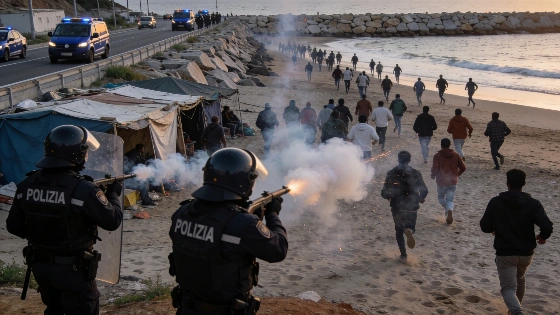
Spanish police deployed tear gas at Trampolín Beach in Ceuta after clashes among migrants. The intervention aimed to restore order during a tense food distribution. No serious injuries were reported.
Police in Ceuta were forced to deploy tear gas and riot control measures on Tuesday evening at Trampolín Beach, after tensions flared among thousands of migrants gathered for the daily food distribution. The incident unfolded around 19:00, when large groups awaiting aid from Cruz Roja became involved in confrontations, prompting security forces to intervene decisively to prevent the unrest from spreading through the makeshift settlement.
According to police sources, several isolated clashes between migrant groups led to a rapid escalation, requiring officers to carry out targeted dispersal actions. Tear gas and other anti-riot equipment were used to break up the crowds and reestablish control over the area. Authorities emphasized that these were precautionary measures and, based on initial reports, no significant injuries occurred during the operation.
The police response triggered a chaotic scene, with hundreds of migrants fleeing the beach toward the access road and the breakwater, amid confusion and heightened anxiety. Local police restricted traffic in the vicinity to support the intervention and maintain safety around Trampolín Beach, which has become a focal point for migrants since the mass entry at the end of July.
In recent weeks, Trampolín Beach has seen a surge in makeshift shelters and a concentration of people relying on humanitarian aid for food, hygiene, and temporary accommodation. The area now serves as one of Ceuta’s main informal settlements, with thousands remaining in precarious conditions as authorities and aid organizations attempt to manage the situation.
Spain has faced several high-profile incidents involving law enforcement and public order in recent years. For example, a controversial police intervention at a football match in Elche sparked political debate over the use of force and the balance between security and civil rights. Such events highlight the ongoing challenges Spanish authorities encounter in managing large gatherings and maintaining public safety, especially in sensitive contexts like migration and humanitarian crises.
Ceuta’s unique position as a Spanish enclave on the North African coast makes it a frequent entry point for migrants seeking to reach Europe. The city’s limited resources and infrastructure are regularly tested by sudden influxes, leading to complex coordination between national police, local authorities, and humanitarian groups. The latest unrest at Trampolín Beach underscores the persistent pressures on Ceuta’s emergency response systems and the delicate balance required to ensure both security and humanitarian support.