Pope Leon XIV to Visit Canary Islands for the First Time: Focus on Migration Crisis. Pope Leon XIV will visit the Canary Islands for the first time. Migration issues, the fate of survivors, and a symbolic act of remembrance will be in the spotlight. Authorities and community organizations hope for changes in attitudes toward migrants.
Pope Leon XIV will make an unprecedented visit to the Canary Islands—a move that has already sparked significant attention among migrants, locals, and civil society organizations. The pontiff's arrival on Tenerife and Gran Canaria on June 11 is expected to be not only a religious milestone but also a socially significant event, aimed at highlighting one of the region's most pressing issues—the migration crisis along the Atlantic route.
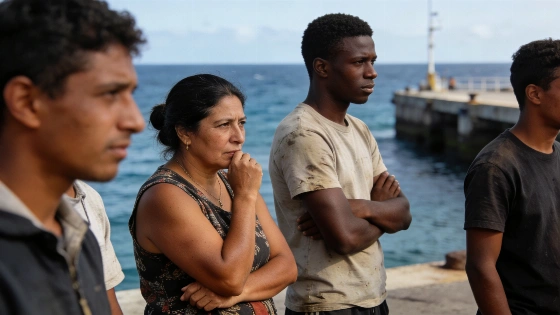
For many migrants stranded in the Canaries, this visit represents a chance to be heard. Among them is 48-year-old Colombian Thalia Joana Saldarriaga, who ended up homeless after arriving in Spain last year and was only able to get help through the Ciprés project from Cáritas. She notes that meeting with the Pope is an important symbol for everyone who has struggled to find housing and legal status. The invitees also include migrants from Africa and Latin America, for whom the pontiff’s visit is an opportunity to remind people of the true scale and the victims of migration.
The significance of the visit is heightened by the fact that Leon XIV himself has lived outside his homeland: he was born in the USA, worked for many years in Peru, and has Peruvian citizenship. According to Cecilia Cañote, who came to the Canaries from Peru with her family, the Pope is seen as someone who truly understands the challenges faced by migrants. She emphasizes that his story mirrors the journeys of many who have been forced to leave their countries in search of a better future.
According to Cáritas, in recent years the Canary Islands have become one of the main entry points for migrants to Spain. In 2024 alone, 46,843 people arrived illegally on the archipelago, and the route from West Africa is considered one of the most dangerous in the world. Last year, according to the organization, nearly 2,000 people died along this journey, including hundreds of children. Many survivors, like Gambian Mohammed Sellou Jallow, endured perilous boat journeys, deportations, and months of homelessness even after arriving in Spain.
As part of the Pope's visit to Gran Canaria, a symbolic gesture is planned: at the Arguineguín pier, which became a symbol of the migration crisis in 2020, the pontiff, together with migrants and volunteers, will lay flowers in memory of those who died on the Atlantic route. Most participants in this event are Muslim, but for them it is important that the leader of the Catholic Church is ready to listen to their stories and support them in a difficult moment.
Organizers of the visit hope that the arrival of Pope Leon XIV will help change public perceptions of migrants and reduce the level of xenophobia. As noted by Cáritas, it is important not only to draw attention to the problem, but also to combat the spread of false ideas and accusations against newcomers. Authorities and public organizations are hoping this step will mark the beginning of long-term changes in attitudes toward migration in the Canaries.
In the context of the Pope's visit to Spain, it is worth recalling that Madrid has previously faced large-scale restrictions and changes to city life due to similar events. For example, in the capital, authorities have introduced free public transport and asked companies to switch employees to remote work in order to minimize transport collapse during mass gatherings associated with the pontiff's visit. More details about the measures taken in Madrid can be found in the article on the city's preparations for the visit of Pope Leo XIV.
For reference: the Canary Islands are one of the main migration routes to Europe, where thousands of attempts to cross the sea in small boats are recorded every year. According to international organizations, the mortality rate along this route remains one of the highest among all routes to the EU. Spanish authorities and humanitarian organizations continue to seek solutions to support migrants and reduce the number of tragedies at sea.