A magnitude 7.2 earthquake shook the Andean region of Ayacucho in southern Peru on Thursday, information from the Instituto Geofísico de Perú (IGP). The epicenter was 35 kilometers north of Coracora, a city about 650 kilometers south of Lima. The tremor was recorded at 13:00 local time (18:00 UTC) at a depth of 108 kilometers. In Coracora, shaking reached levels III-IV on the local scale.
The U.S. National Weather Service’s National Tsunami Warning Center recorded the earthquake at 18:00 UTC on August 20 and issued a tsunami information message for Alaska, British Columbia, Washington, Oregon and California, but no warning or advisory. Its preliminary estimate was magnitude 6.8 at a depth of about 121 kilometers, with coordinates of 14.7°S, 73.8°W. Those initial parameters differ from the IGP’s magnitude 7.2 and depth of 108 kilometers. The U.S. bulletin cautioned that its quick preliminary assessment could change. The center said, “Based on the depth of the earthquake no tsunami is expected,” and stated that its bulletin would be the only message for the event unless new information became available.
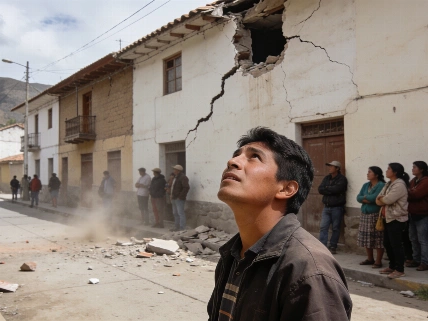
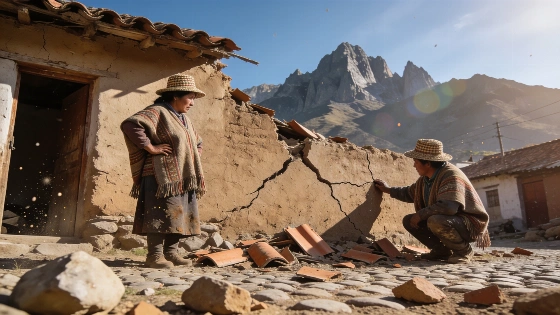
Initial reports from the IGP and the Centro de Operaciones de Emergencia Regional (COEN) indicate that no injuries or impressive material damage have been confirmed so far. But, local media have reported rockfalls and structural damage to some homes in Ayacucho. The earthquake was also felt, though more weakly, in Lima and nearby areas. Authorities continue to monitor the situation. IGP head Hernando Tavera said no critical incidents had been detected at this stage, while evaluations were ongoing.
Peru lies along the Pacific Ring of Fire, a region responsible for about 80% of the world's seismic activity, and has a long history of destructive earthquakes. In July of the previous year, the neighboring region of Junín experienced a series of tremors. The strongest reached magnitude 5.4, causing five fatalities and widespread property damage. The most devastating recent event occurred in 2007 in Ica, where a magnitude 7.9 quake led to around 500 deaths and extensive losses.
Seismic activity is not unique to Peru. Spain's province of Granada has also experienced impressive earthquakes in recent years, as highlighted in a recent report on tremors in Alhendín. Such events show why preparedness and rapid response matter in regions prone to seismic risks.
Given the country's vulnerability to major seismic events, earthquake monitoring and emergency protocols remain a priority for Peruvian authorities. The IGP and COEN continue to assess the aftermath in Ayacucho, while local residents remain alert for possible aftershocks. The situation is developing, and inspections and community reports are expected to provide further information.
Peru's seismic risk is among the highest in South America because of its position on the boundary of the Nazca and South American tectonic plates. The government has invested in early warning systems and public education campaigns, but protecting remote Andean communities remains a impressive challenge. The latest earthquake in Ayacucho highlights the persistent threat and the need for continued vigilance and resilient infrastructure in the region.