The PP now supports granting Spanish nationality to all grandchildren of emigrants, not just exiles. Feijóo criticizes the process as arbitrary and lacking guarantees. The debate raises concerns about public services and legal clarity.
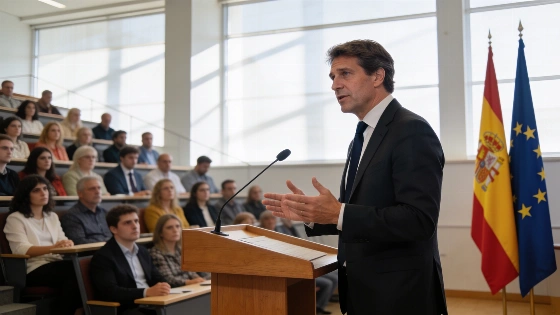
The Partido Popular has shifted its stance and now openly supports granting Spanish nationality to all grandchildren of Spanish emigrants, regardless of whether their ancestors were exiled. This position was confirmed by party leader Alberto Núñez Feijóo during a public appearance at the Universidad Internacional Menéndez Pelayo in Santander. Feijóo stated that the PP agrees with extending nationality rights to any grandchild who can clearly prove their family connection to a Spanish emigrant.
Despite this endorsement, Feijóo sharply criticized the way the process is being implemented. He argued that the current system is marked by arbitrariness, a lack of transparency, and insufficient legal safeguards. According to Feijóo, these issues stem from a ministerial instruction issued shortly after the Ley de Memoria Democrática was enacted in October 2022. This instruction broadened eligibility for nationality to include all individuals born outside Spain to Spanish parents or grandparents, not just descendants of exiles.
The PP contends that this ministerial instruction effectively alters the original intent of the law, which was designed as a reparative measure for those who suffered exile for political, ideological, religious, or identity reasons. Feijóo maintains that such a significant change should not be made through an administrative instruction, as it raises questions about legality and the proper legislative process. Nevertheless, the party now supports the broader application, even as it questions the method by which it was introduced.
Another concern raised by the PP involves the potential strain on public services, particularly healthcare, if a large number of new citizens decide to relocate to Spain. Feijóo framed this as a matter of defending the welfare state, suggesting that the government should ensure the system can handle increased demand before expanding eligibility further.
The Ley de Memoria Democrática, which underpins the current nationality process, was originally intended to address the injustices faced by those forced into exile. Its additional provisions allow for nationality claims by those born abroad to Spanish parents or grandparents, provided the original ancestor lost or renounced Spanish citizenship due to exile. The debate over the law and its implementation highlights ongoing tensions between reparative justice and administrative procedure in Spain's approach to citizenship.
For context, Spain has a long history of emigration, particularly during the 20th century, with significant communities established in Latin America, Europe, and beyond. The question of nationality for descendants has been a recurring issue, especially as many seek to reconnect with their heritage or access opportunities in Spain. The current debate reflects broader discussions about national identity, legal certainty, and the capacity of public institutions to adapt to demographic changes. As the process continues, clarity on eligibility and the practical implications for both applicants and Spanish society remains a central concern.