The Partido Popular urges the government to deploy continuous immigration shifts in Ceuta. The party insists on immediate returns of all migrants who entered in July. Controversy grows over proposed health measures and the city's capacity.
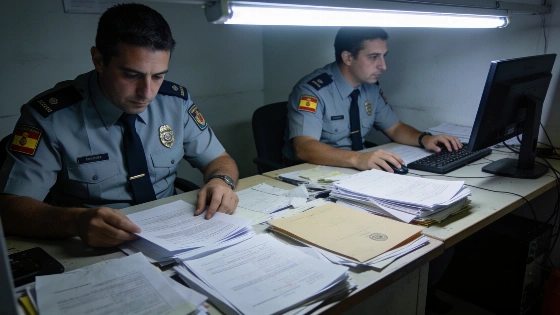
The Partido Popular (PP) has intensified its demands on the Spanish government to accelerate the return of migrants who entered Ceuta during the mass crossing at the end of July. The party is calling for immigration services in the autonomous city to operate around the clock, with morning, afternoon, and night shifts, to process expulsions without delay. According to PP spokesperson Borja Sémper, all necessary immigration units and staff should be deployed to Ceuta to ensure that every migrant is returned to Morocco as quickly as possible.
This push comes as Ceuta continues to host thousands of migrants, with estimates suggesting around 7,000 people remain in the city. The PP has made clear it opposes any redistribution of these migrants to mainland Spain, even as the government prepares to transfer 500 vulnerable girls to other regions due to concerns over their safety. Sémper emphasized that the party's priority is return, not relocation, and avoided commenting on how PP-led regions would respond if required to accept minors.
The party has also revived a controversial proposal to confine migrants diagnosed with infectious diseases such as gastroenteritis, scabies, or tuberculosis. This suggestion persists despite opposition from scientific societies, including the Sociedad Española de Epidemiología, whose president Maria João Forjaz stated that current conditions do not justify such measures. She argued that the most effective approach is to guarantee dignified living conditions, access to sanitation, safe water, and adequate shelter to prevent outbreaks.
PP leadership acknowledges that more data is needed before any confinement could be considered and that the Ceuta government, led by PP's Juan Jesús Vivas, has not formally requested such action. The party insists, however, that the government should rigorously study the option, warning that inaction would be a serious mistake. Any decision on confinement would require prior reports from the Ministry of Health.
The issue of migrant returns from Ceuta has previously sparked diplomatic tension between Spain and Morocco. As highlighted in a related report, Morocco has formally requested Spain to repatriate both survivors and deceased migrants following earlier mass entries. The ongoing situation underscores the complexity of managing migration flows at the border and the reliance on cooperation with countries of origin.
Ceuta, a Spanish enclave on the North African coast, has long been a focal point for irregular migration from Morocco and sub-Saharan Africa. The city’s limited resources and infrastructure are frequently stretched during large-scale arrivals. Spanish law requires that unaccompanied minors be protected and their best interests considered, complicating immediate returns. The government’s ability to carry out mass deportations depends not only on administrative capacity but also on agreements with Morocco and compliance with international obligations. The debate over health measures for migrants adds another layer of complexity, as public health recommendations often differ from political proposals. The situation in Ceuta remains a test of Spain’s migration policy and its coordination with regional and international partners.