Alberto Núñez Feijóo and Juan Jesús Vivas reject transfers from Ceuta. They want returns to Morocco and accuse Sánchez of letting the crisis drag on.
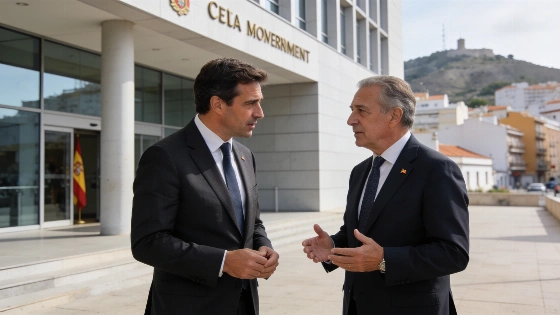
Alberto Núñez Feijóo and Juan Jesús Vivas have united against plans to transfer migrant minors from Ceuta to mainland Spain. Vivas still opposes the move, even though it would ease pressure on the autonomous city. Both men are calling on the central government to use legal and diplomatic channels to return the minors to Morocco.
The dispute is now Ceuta's main political fight. Feijóo says the government is letting the crisis drag on and looking for someone to blame instead of solving it. Vivas has suggested that Ceuta is being used as the setting for another fight over migration policy.
The Spanish government proposed transferring 500 of the most vulnerable minors to mainland Spain while leaving legal guardianship with Ceuta. The operation was still awaiting formal approval from the autonomous city’s authorities.
Feijóo made those comments during his fourth visit to the city since the mass arrival at the end of July. Manfred Webber, leader of the European People's Party, joined him. Webber backed the call for returns and warned Morocco that the European Union could respond if Rabat refuses to cooperate.
The pressure is also showing on Ceuta's streets.
A regional deputy from Ceuta Ya! and two NGO activists were attacked on Sunday by several dozen demonstrators. The group threw stones at their car as they tried to get away. The windows broke and the vehicle was badly damaged. Feijóo and Vivas condemned the attack. The Ceuta president said violence must be rejected whoever uses it.
By mid-September, about 2,048 minors were officially registered under Ceuta’s care, including 1,612 who had arrived during the mass influx at the end of July. Spanish media, citing official sources, also reported that roughly 700 to 1,000 other minors remained outside the formal system and were effectively living on the streets.
Vivas says the only way back to normality is to return those who arrived during the latest crisis. He says Moroccan authorities have repeatedly stated that they are ready to receive the minors. He also accuses the central government of dropping an earlier priority, family reunification.
That is a tougher position than the one Vivas held before the latest mass arrival. At that time, he said sending every migrant back was not workable.
The government is working from a different legal and practical view. Sira Rego, Minister for Youth and Children, has said that most of the minors want to stay in Spain. She says the law protects them regardless of their nationality or origin. In her view, the children are likely to remain in Spain, so a return to Morocco is far from automatic.
The Ministry for Youth and Children says every return must be handled separately through an assisted-return procedure. Officials must assess the child's best interests, and the public prosecutor must oversee the process. The ministry says an immediate or collective return is not possible.
The Prosecutor's Office has also confirmed that Ceuta holds guardianship. It has called the situation extraordinary and asked the state for support.
Feijóo says Rabat's public offer should be tested through legal and diplomatic action. He wants the central government to identify the minors and provide enough officials to do the work. The government remains sceptical because Morocco did not accept minors from the previous migration crisis in 2021.
By mid-September, officials had begun preparing the first individual files. The issue was moving out of the emergency phase and into a slower administrative process.
Several regions governed by the PP and Vox are still receiving minors who arrived in Ceuta before the latest crisis. Ceuta's administration says procedures for those still in the city will continue in the coming weeks. That adds another point to the dispute over who should carry the responsibility.
The pressure can also be seen in the handling of adult migrants. Official Spanish government figures put voluntary returns to Morocco at between 5,321 and 5,482 by mid-September. The interior minister later said that 150 to 200 people were returning each day.
Those returns are voluntary. They do not create a legal model for transferring unaccompanied minors.
The political fight has become harder to miss. Interior Minister Fernando Grande-Marlaska travelled to Ceuta on Monday but was not due to meet Vivas. The Ceuta president had declined a meeting offered by the minister the previous week, citing scheduling reasons, according to Interior Ministry sources.
Grande-Marlaska's programme included a working session at the Government Delegation and a media appearance.
Feijóo's delegation was meant to give the dispute a European dimension. The PP wants European Commission President Úrsula Von Der Leyen and Immigration Commissioner Magnus Brunner to visit Ceuta.
Webber also referred to a letter signed by 22 European countries in early August. The letter criticised Sánchez's migration policy. Webber used it to argue that Spain is isolated.
The PP is treating Ceuta as a test of the government's migration policy and as a way to apply pressure in Spain and Europe. The facts point to a political standoff, not a settled solution.
The minors' legal status, the individual return procedures and Morocco's willingness to receive them still have to become working processes. Until then, Ceuta remains caught between its duty to protect the minors and demands for immediate returns. The central government must explain what process it will follow as the PP continues to use Ceuta as its most visible weapon against Pedro Sánchez.