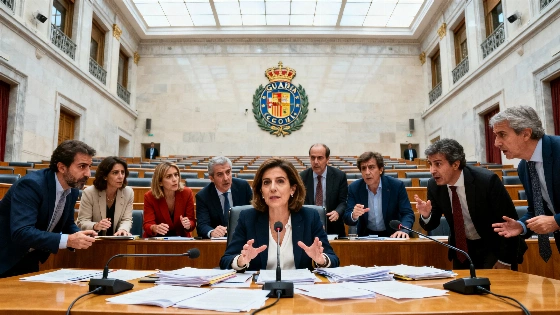
The Partido Popular has escalated its actions against Mercedes González. New written questions target her Senate testimony and the creation of a post for Rubén Villalba. The government’s response is now under scrutiny.
The Partido Popular (PP) has stepped up its campaign against Mercedes González, director of the Guardia Civil, following her recent appearance before the Senate’s Interior Committee. The party is demanding written answers from the government after González denied having meetings with Leire Díez, claiming their only interaction was a coffee. This denial, now under question, has triggered a new wave of parliamentary initiatives from the PP, as reported by Libertad Digital.
At the heart of the dispute is the testimony of Rubén Villalba, a Guardia Civil commander mentioned in the UCO’s investigation into alleged misconduct linked to the PSOE. According to the case file, Leire Díez attempted to recruit Villalba to disrupt probes into Pedro Sánchez’s circle. Villalba stated that a position in Rome was created to facilitate his transfer abroad while he was under investigation in the Koldo case. Although Villalba ultimately declined the post, citing concerns about his reputation, the vacancy was officially published in the BOE. González, however, publicly insisted she had rejected Díez’s request outright, a claim now challenged by the PP’s inquiries.
The PP’s latest questions, signed by Interior spokesperson Ana Belén Vázquez and others, focus on why González allegedly misled the Senate and seek clarification on the timing and reasoning behind the creation of the Rome post. The party has also called for both González and Interior Minister Fernando Grande-Marlaska to appear before Congress, intensifying the political fallout. Marlaska himself initially denied meetings with Díez before later admitting to them, further complicating the government’s position.
Prime Minister Pedro Sánchez has publicly backed González despite the mounting controversy. The sequence of denials and subsequent admissions has placed both González and Marlaska under increased scrutiny, with the PP determined to clarify the extent of their involvement and the true nature of their interactions with Leire Díez. This episode echoes other recent political confrontations in Spain, such as the public fallout seen in the valley after a bishop’s arrival, which was detailed in a recent report on tensions triggered by leadership disputes.
For context, the Guardia Civil is Spain’s oldest law enforcement agency, operating under the Ministry of the Interior. Parliamentary oversight of its leadership is a regular feature of Spanish politics, especially when allegations of political interference arise. The BOE (Boletín Oficial del Estado) is the official state gazette where all public appointments and legal notices are published. The Koldo case, referenced in the investigation, has been a focal point for opposition parties seeking to highlight alleged irregularities within government ranks. The current developments underscore the ongoing friction between the PP and the ruling PSOE, with institutional transparency and accountability at the center of the debate.