Healthcare is now the main battleground for the Partido Popular as elections near. Carmen Fúnez pledges a major overhaul of Spain's health system, with a focus on unity, support for professionals, and stable funding.
Spain's Partido Popular is making a big bet. The party wants to overhaul the country's healthcare system from the ground up. Carmen Fúnez, national vice-secretary for Health and Social Policy, says the current Sistema Nacional de Salud is outdated. The PP plans to put healthcare reform at the front of its campaign.
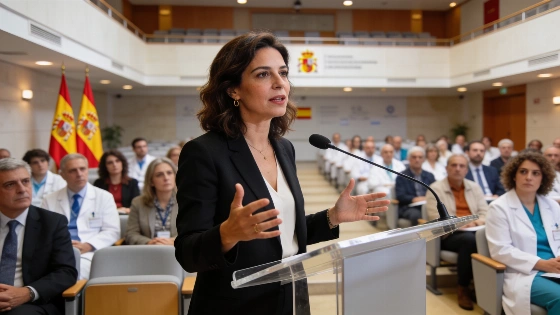
At the VII Simposio del Observatorio de la Sanidad, Fúnez spoke bluntly. She said the real danger for Spanish healthcare is doing nothing. "The biggest risk for Spanish healthcare is to leave it as it is," she said. Outdated laws and a system under pressure are at the heart of the problem. The PP's stance is clear. Spain's health system is built on a model that no longer fits the country. Change can't wait.
The National Institute of Health Management (INGESA) regularly publishes calls for temporary healthcare positions, reflecting ongoing staffing needs in the Spanish health system.
Fúnez promised that if the PP wins, Spain will have a prime minister who knows the health system inside out. She refused to dwell on past legislative failures. Her focus is on what comes next. The PP wants everyone at the table—regional governments, healthcare workers, and tech leaders. Reform will need all hands.
The territorial gap is a flashpoint. Fúnez called out the current setup, where a patient's care depends on their postcode. The PP wants to fix this. The Interterritorial Council should be a place for real coordination, not a fight between Madrid and the regions. "We must recover the policy of cohesion in healthcare," she said. Unity matters.
Healthcare workers are at the core of the PP's plan. Fúnez was direct: "There will be no healthcare reform with the PP without involving professionals." The party wants to improve working conditions and put professionals in charge of change. She also backed healthcare staff in Ceuta, who face tough conditions.
According to the National Institute of Health Management (INGESA), the publication of temporary job offers is one of the mechanisms used to address staffing requirements in the Spanish healthcare sector. However, these postings do not provide comprehensive data on the scale of workforce shortages or specific reform plans under discussion.
Generational change is coming. Data shows Spain will soon lack enough doctors in several specialties. The PP wants to match MIR training slots to future needs. They also want to give doctors reasons to stay in Spain. Reforming the Estatuto Marco, the law for healthcare workers, is on the table. No one should be left behind.
Primary care is a top priority. Fúnez called it "the backbone of the SNS." But she said it needs to work better and cut red tape. The PP's plan also looks at how patients are changing. Better coordination between administrations is key. Patients and families should not pay the price for inefficiency.
None of this works without money. The PP wants a dedicated funding stream for the SNS in the new regional finance model. This is about keeping the system going. Fúnez also wants to change how public policies are judged. She wants less focus on spending and more on real results. Prevention and health promotion, like vaccines and screenings, will get a boost.
Fúnez did not spare the current government. She pointed out that the only law passed was to create the Agencia de Salud Pública, which she said was just a decision to put it in Zaragoza. She also warned about the lack of a strategic medicine reserve. Spain, she said, should not face another crisis unprepared. The country can do better.
Mental health will be a core promise in the PP's plan. Fúnez says the new model will focus on people—patients and professionals—not just bureaucracy. The PP wants a health system that fits Spain's new reality. Cohesion comes first. Results and people matter most.
The election is close. The PP's healthcare plan is a sharp break from the old ways. The party is betting voters want a system that is modern, fair, and built to last. Healthcare is personal in Spain. The next few months will show if this promise of reform is enough to win over a country used to both the strengths and the strains of its public health system.