PP-governed regions will join the first technical meeting with Minister Sira Rego on the Ceuta minors crisis. Vox, controlling key regions, rejects participation. The Senate keeps up pressure on the government for answers.
Spain’s ongoing crisis over unaccompanied migrant minors in Ceuta has reached a new stage, as the Ministry of Youth and Children, led by Sira Rego, convenes a technical meeting this Thursday to address the emergency. Despite strong opposition from Vox, the Partido Popular (PP) has confirmed that representatives from its single-party regional governments will participate in the talks, according to several regional sources cited by EL PAÍS. Vox, which holds authority over youth and childhood in Extremadura, Aragón, and Castilla y León, has announced it will boycott the meeting, aiming to block the transfer of minors to the mainland.
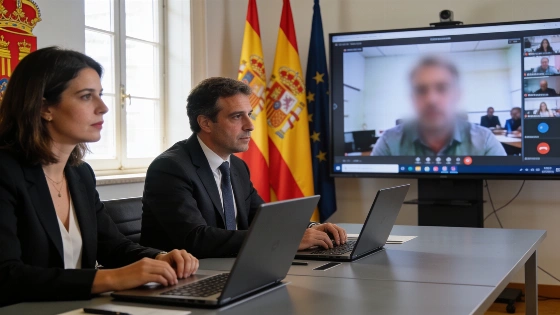
The meeting, set to take place via videoconference, will bring together directors general from the relevant departments, just below the level of regional ministers. The focus is on managing the influx of over 1,300 minors registered by police in Ceuta, with many more still seeking official processing at the city’s police headquarters. The Ministry’s goal is to lay the groundwork for a full Sectoral Conference on Childhood and Adolescence, expected in late August, where regional ministers will be called to coordinate a national response.
PP leadership maintains its opposition to making autonomous communities responsible for the care of these minors, arguing that local resources are already overstretched. However, the party insists it will comply with the law, which requires regions to accept minors from territories that have exceeded their capacity by threefold—a situation now affecting Ceuta, Melilla, and the Canary Islands. Elías Bendodo, PP’s deputy secretary for Regional and Municipal Policy, emphasized that attending the meeting does not mean endorsing the government’s policies, but underlined the party’s commitment to legal obligations. He also called for the central government to prioritize family reunification and engage with Morocco on the issue.
Minister Sira Rego has echoed the need for individualized assessments to determine each child’s situation, stating that family reunification is also the central government’s objective. This approach was reiterated by Ángel Víctor Torres, Minister of Territorial Policy, during his visit to Ceuta, highlighting the importance of prioritizing family links for the minors currently in the city.
Meanwhile, the Senate, where the PP holds an absolute majority, has intensified scrutiny of the government’s handling of the crisis. The Senate’s leadership has scheduled three key committee sessions for mid-August, summoning the Ministers of Interior, Defense, and Foreign Affairs to address the situation. Despite the government’s refusal to attend, citing overlap with upcoming appearances in Congress, the Senate maintains its demands for accountability. Senate President Pedro Rollán has formally warned ministers of possible consequences if they fail to appear.
Spain’s system for managing unaccompanied minors relies on cooperation between the central government and autonomous communities, coordinated through the Sectoral Conference. The current crisis in Ceuta has exposed deep political divisions, with PP and Vox taking sharply different stances on regional responsibility and the future of the minors. The legal framework obliges redistribution when local capacity is overwhelmed, but implementation remains contentious. As the number of arrivals continues to rise, the outcome of these meetings will shape both immediate responses and longer-term policy on migration and child protection in Spain.
Ceuta, a Spanish enclave on the North African coast, has long been a focal point for irregular migration from Morocco and sub-Saharan Africa. The city’s limited resources are frequently tested by sudden influxes, making coordination with other regions essential. The current standoff between PP and Vox reflects broader national debates over migration, regional autonomy, and the limits of solidarity within Spain’s decentralized system. The coming weeks will be critical in determining how responsibilities are shared and whether political consensus can be reached on one of the country’s most sensitive humanitarian challenges.