The Partido Popular has intensified pressure on the government after thousands crossed into Ceuta. PP leaders avoid direct criticism of Morocco, focusing instead on Madrid's response. Parliamentary action and legal reforms are now on the table.
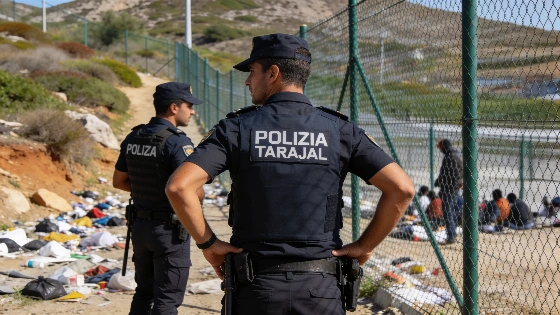
The Partido Popular (PP) has escalated its criticism of the Spanish government following the recent crisis in Ceuta, where around 60,000 people entered the city through the Tarajal border. While the party's leadership refrains from openly condemning Morocco, it has directed its strongest accusations at the executive led by Pedro Sánchez, questioning its preparedness and response to the situation.
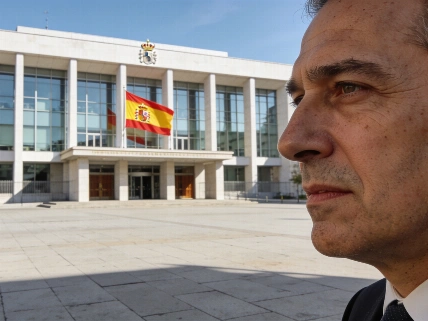
During a visit to Ceuta, PP leader Alberto Núñez Feijóo described the mass entry as a “premeditated occupation,” but stopped short of blaming Rabat directly. This approach was echoed by the party’s secretary general, Miguel Tellado, who, in a press conference in Madrid, argued that the government’s lack of self-respect undermines Spain’s standing with other countries. The PP leadership’s stance stands in contrast to that of Ceuta’s own president, Juan Jesús Vivas, also from the PP, who labeled Morocco an unreliable partner in an interview with EL PAÍS.
Instead of confronting Morocco, the PP has focused on the government’s alleged failure to anticipate and manage the crisis. Tellado insisted that the responsibility for preventing such incidents lies with Madrid, emphasizing the need to clarify what went wrong in cooperation with Morocco. He also stressed that effective international relations require reciprocity and consistent collaboration, not responses dictated by changing circumstances.
Feijóo, speaking on Telecinco, questioned whether Spain’s intelligence services were aware of the planned mass entry and criticized the government’s handling of the situation. He suggested that, in other European countries, such failures would have led to resignations at the highest levels, including the prime minister and the defense minister.
In parliament, the PP has launched a coordinated offensive. In the Congress, the party has submitted written questions to the government regarding the Ceuta crisis. In the Senate, where the PP holds an absolute majority, it has requested documentation on irregular entries, Interior Ministry instructions following a Supreme Court ruling, and protocols for handling such incidents. However, the party has not yet demanded urgent ministerial appearances during August.
The PP has also called for detailed data on daily entry attempts, fatalities during crossings, government actions against criminal networks involved in people smuggling, and the extraordinary costs incurred in managing the migration pressure. While these requests can be ignored by the executive, they signal the party’s intent to keep the issue in the spotlight.
Additionally, the PP is demanding urgent reform of Spain’s immigration law to ensure that the “border rejection” mechanism applies to maritime entries into Ceuta and Melilla. This move follows a recent Supreme Court decision that prohibits immediate returns of migrants intercepted at sea. The PP’s proposed legislation, registered in July, aims to address this legal gap.
Tellado acknowledged that dialogue with the PSOE on this issue has stalled, noting that the PP’s legislative initiative has not been debated despite two extraordinary parliamentary sessions. He criticized the government for what he described as neglect of its responsibilities during the summer recess.
Ceuta, a Spanish enclave on the North African coast, has long been a focal point for migration from Morocco and sub-Saharan Africa. The recent crisis has reignited debate over Spain’s border management and its complex relationship with Morocco. The Supreme Court’s ruling on maritime returns has added legal uncertainty, prompting calls for legislative clarity. As the political standoff continues, the effectiveness of Spain’s migration policy and its diplomatic ties with Morocco remain under scrutiny.