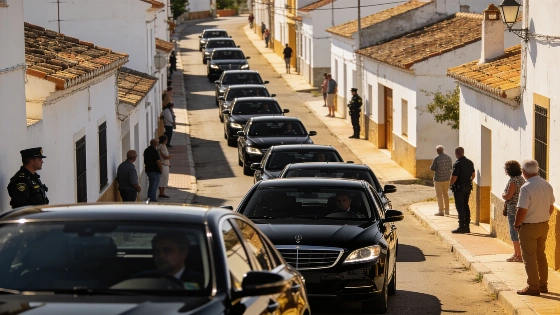
A convoy of ten vehicles escorted Pedro Sánchez through the quiet streets of San Juan del Puerto. The Spanish prime minister’s visit to Huelva province drew attention for its scale and the logistical show of force in towns with just over 10,000 residents.
Ten official vehicles wound their way through the narrow streets of San Juan del Puerto as Pedro Sánchez’s motorcade crossed Huelva province. In a town of just over 10,000 people, the arrival of Spain’s prime minister was impossible to miss, especially with such a visible security and logistics operation.
Sánchez started the day by landing in Seville on a Falcon jet, then switched to a Super Puma helicopter for a short flight to La Rábida. There, he attended the launch of the Onuba project at the Moeve Energy Park, a 300-megawatt renewable hydrogen plant. The project is part of a larger plan for the Valle Andaluz del Hidrógeno Verde. According to official sources cited by Europa Press and other Spanish outlets, this is just the first phase—Moeve aims to develop up to 2 gigawatts of electrolyzer capacity between Huelva and Cádiz by 2029.
The Onuba project received approximately 304 million euros in public funding as part of Spain's Recovery, Transformation and Resilience Plan and NextGenerationEU.
Between scheduled events, Sánchez’s convoy made several unscheduled stops across the province. After leaving Moeve around midday, the president’s team diverted to San Juan del Puerto for a visit to the Factoría Cultural Jesús Quintero. The sight of a ten-car procession weaving through the town’s small streets drew plenty of attention from residents. Scenes like this have become more common in Spanish political life, as noted in recent coverage of similar visits.
The itinerary continued with a stop in Bonares, where Sánchez was scheduled to arrive at the town hall by 13:30, followed by lunch at Bar Adelin. By mid-afternoon, the convoy was on the move again, heading to Niebla to meet with mayors from areas affected by a recent wildfire. The official schedule listed the Niebla meeting at 14:50, but the day’s route included several additional, less-publicized stops. According to ABC, the visit to the wildfire zone in Niebla took place nearly a month and a half after the fire began, with the meeting involving mayors from municipalities such as Niebla, Villarrasa, Villalba del Alcor, and others directly affected by the disaster.
Presidential logistics on this scale are not new, but the contrast between the size of the security operation and the small towns visited stood out. The use of both air and ground transport—Falcon jet, Super Puma helicopter, and a fleet of vehicles—shows the complexity of even routine political visits in Spain’s provinces. According to Google/SpainAuto, the day’s events were carefully planned, but the convoy’s presence was hard to ignore.
The wildfire in the Niebla area was one of the largest in Spain in 2026, with official sources reporting approximately 40,000 hectares of land burned. The meeting with local mayors was part of the government’s response to this significant environmental disaster.
While the official purpose of the trip focused on energy investment and disaster response, the image of a ten-vehicle motorcade rolling through small-town Andalusia stood out. This approach signals a government intent on showing its presence, even in modest municipalities. In a climate where public perception of political distance is a recurring theme, such high-profile visits highlight both the reach and the remoteness of national power. When the prime minister comes to town, the entire machinery of state comes with him.