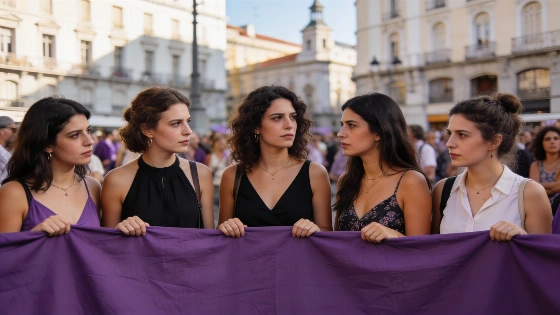
Women Demand Equal Rights in the Church at Pope’s Mass in Madrid. In Madrid, a group of Catholic women advocated for equal rights for women in the Church during the Pope’s Mass. Their protest, marked by purple ribbons, drew discontent from some worshippers. The conflict highlighted that the issue of equality remains contentious.
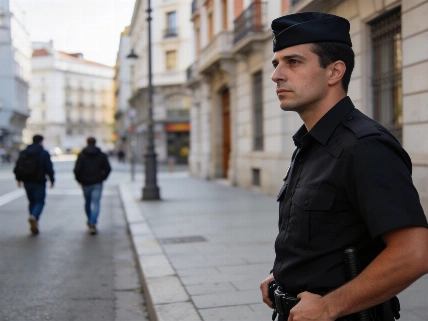
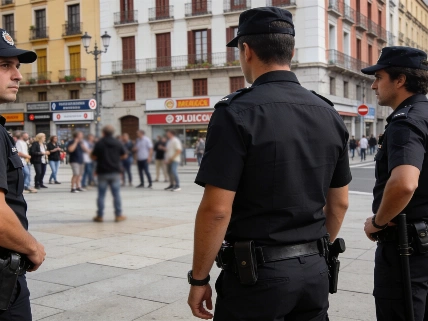
In the center of Madrid, at Plaza de Cibeles, during the Pope's mass, debate once again flared over the role of women in the Catholic Church. More than twenty participants from the “Revuelta de las Mujeres en la Iglesia” movement unfurled a purple ribbon demanding equality, which irritated some of those present. Several believers tried to persuade the police to remove the ribbon, citing inconvenience, but law enforcement did not intervene.
The demonstration was a continuation of the struggle for women's rights in the Church, which activists have led since 2019. The organization brings together Catholic women across Europe and is part of the Council of Catholic Women. According to participants, their goal is not only to achieve change for themselves, but also for future generations. One young participant, 18-year-old Laura Cubillos, noted that such protests make society reflect on traditional restrictions.
Among the protesters was Teresa Casillas, an Argentinian with years of experience in the Catholic community. She shared that she first began to think about inequality when her daughters asked, "Mom, why can't I be a priest?" She said that despite certain steps towards expanding women's rights during Francis's papacy, access to priesthood and the diaconate for women remains closed. Casillas believes that formally appointing women to high positions does not always mean real power: even in these new roles, they often face resistance and mockery from the hierarchy.
During the mass, hundreds of cardinals and archbishops stood with the Pope at the altar, none of whom were women. According to activists, this fact clearly demonstrates the existing inequality. Against the backdrop of protests and debates, small children played near the barrier, staying apart from the adult conflict.
The Pope's visit to Spain has intensified attention to church issues. Previously, there have already been debates in the country about organizing religious events; for example, the city of Barcelona refused to charge rent for the stadium used for the meeting with the Pope, which sparked discussions among politicians. In Spain, according to official data, out of 31,500 religious personnel, 24,000 are women; however, their access to key roles remains limited. The Praedicate Evangelium constitution, adopted under Francis, allowed women to hold leadership positions in the Vatican, but most decisions are still made by men. The issue of equality remains one of the most pressing for the country's Catholic community.