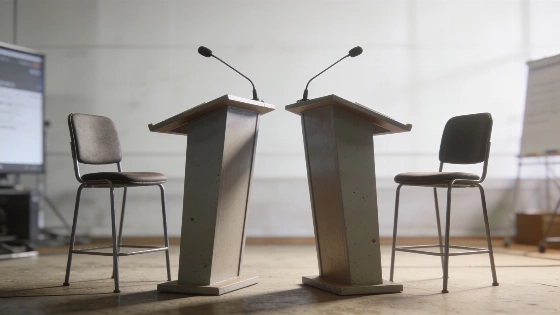
The PSOE says it will attend every proposed debate before 29 November. Feijóo has accepted a Mediaset face to face with Sánchez, but the broadcaster has not fixed a public date and the PP has suggested 16 November.
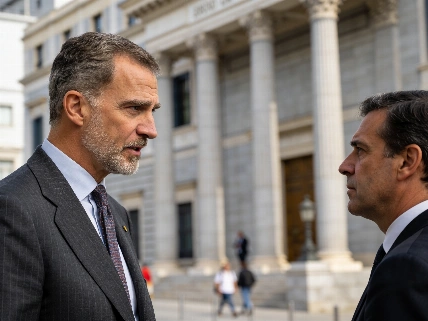
Alberto Núñez Feijóo has proposed a Mediaset face to face with Pedro Sánchez for 16 November, although independent reports have not confirmed that date as part of the broadcaster's fixed schedule.
The PSOE has answered by committing to every election debate held before the 29 November general election. The socialists insist that broadcasters, rather than parties, must organise these encounters. They say the candidates will attend every debate that is formally proposed.
That position has opened the campaign's first major dispute over format. The argument concerns participation. It also concerns the broadcaster, date and line-up that will define the campaign's main televised confrontation.
RTVE has proposed three separate formats: a Sánchez–Feijóo face to face on 17 November, a debate among representatives of eight parliamentary groups on 23 November and a four-candidate debate on 26 November.
The debate calendar is already wider than the Mediaset initiative. According to proposals reported by El País, RTVE has put forward the encounters listed above. Atresmedia has proposed a four-candidate debate on 18 November and a Sánchez–Feijóo face to face on 23 November. Mediaset had confirmed its initiative but had not publicly fixed a date, leaving broadcasters to compete for the campaign's central television stage.
Óscar Puente sharpened the criticism on Friday, saying the PP appeared to choose the playing fields that suited it best. Félix Bolaños predicted that the PP campaign would try to muddy the debate with any available issue. He also rejected the demand to investigate the PSOE for illegal financing.
The three largest television groups moved almost simultaneously after the early calling of the election, turning the debate dispute into a question of control over the campaign timetable as well as a question of whether the parties will attend.
The clash has spread beyond television. 'La Séptima' has offered the major political forces candidate face to faces and subject-based debates on the economy and foreign policy. UGT secretary general Pepe Álvarez has defended the general strike and day of action planned for 11 November, saying it will address those who feel challenged by it.
Those claims remain political positions reported during the campaign. The independently confirmed debate proposals provide the clearest established timetable so far.
Housing has become the campaign's most emotionally charged line. Patxi López accused PP leaders of refusing to support or respect minutes of silence held for Maricarmen, the 87-year-old woman who died after being evicted from the Madrid home she had rented for more than seven decades.
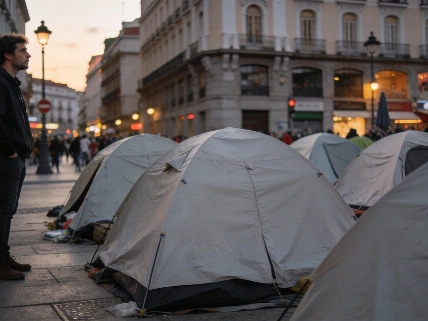
María del Carmen Abascal had lived in the Retiro district for over 70 years. Her rent reportedly rose from about €500 to €2,650 before the eviction. Protests followed, including a camp at Puerta del Sol. Minutes of silence were held across Spain, turning the case into a national symbol of the housing crisis.
The argument has moved into Madrid's institutions and streets. José Luis Martínez-Almeida warned Más Madrid that it would be directly responsible if violence occurred against PP members or officials. Manuela Bergerot rejected the claim that her reference to there being no peace in the streets amounted to a threat.
A minute of silence organised by the Confederación de Sindicatos de Inquilinas with CCOO and UGT was held at noon across workplaces and study centres after Maricarmen's death.
Jupol added a practical warning. The police union said Government delegations had left units without the service orders needed to plan deployments for housing protests and the election pre-campaign. The claim put operational preparation alongside the political confrontation.
For the PSOE, the housing record includes a concession. Óscar Puente acknowledged that Pedro Sánchez's Government had not been sufficiently prepared during its first term, when it had a clearer parliamentary majority. He said it now lacked the tools to solve the problem quickly.
Puente also confirmed that he will head the PSOE list in Valladolid. He said party data placed the socialists as the leading political force.
The Maricarmen case took an unexpected turn after her hospitalisation and mounting public pressure. The investment fund that owned the building agreed, through mediation by the authorities, to let her return to the flat. She died soon afterward.
CNN reported that the Madrid Tenants' Union announced her death on 7 October. The PP also expressed condolences to her family. The housing dispute had moved beyond parliamentary accusations and become a test of each party's public position.
The electoral field is being assembled on several fronts. Movimiento Sumar has chosen its coordinator and Congress spokesperson Verónica Martínez Barbero as its electoral reference for future Frente Amplio lists. She has called for discreet and generous negotiations.
Puente urged Podemos and Frente Amplio to reach an agreement. He told the left to set aside egos and choose its strongest candidates.
Other disputes are adding pressure to the campaign. Miguel Tellado said the PP trusted Correos workers but not its directors. He cited the judicial investigations involving Juan Manuel Serrano and Leire Díez in the 'cloacas' case of the PSOE.
Iustitia Europa has asked the Tribunal Supremo to suspend the 29 November election while the court's precautionary suspension of the so-called 'ley de nietos' is effectively carried out.
The Oficina del Censo Electoral reported almost 38.73 million registered voters for the Congress and Senate elections. The figure included 2.35 million residents abroad.
The same source material refers to the 23 July elections in that census update, even though the political timetable throughout the campaign is set around 29 November. Santiago Abascal will again skip Madrid's central 12 October military parade and mark Día de la Hispanidad in Ceuta.
Several campaign claims require caution. The independently reviewed material does not sufficiently confirm the details of the 11 November UGT action. It also does not confirm the proposals attributed to 'La Séptima', the alleged illegal-financing dispute, the Adamuz derailment or the warning attributed to Madrid mayor José Luis Martínez-Almeida beyond the political statements already reported.
Those claims remain contested elements of the campaign narrative. They do not have the same established status as the broadcaster proposals or the documented developments in the Maricarmen case.
The PSOE's promise to attend every organised encounter gives broadcasters the initiative and places the PP's proposed 16 November meeting inside a wider schedule rather than leaving it as a bilateral arrangement.
The Madrid dispute over a tribute to Maricarmen has also shown how quickly housing can shift from a policy issue into a test of political conduct.