PSOE has reported a leak of confidential court documents on its cash expenses. The party claims the disclosure may constitute a criminal offense. The case involves alleged irregularities between 2017 and 2024.
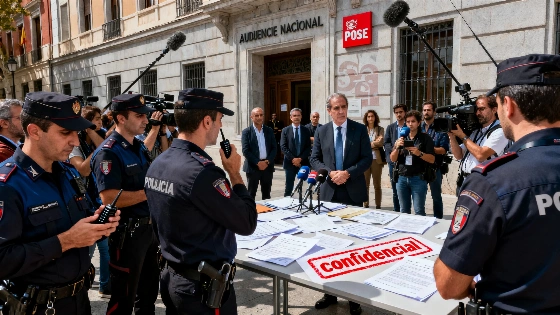
The Spanish Socialist Workers' Party (PSOE) has formally reported a leak of confidential information from a judicial investigation into its cash expenses, covering the years 2017 to 2024. The complaint, filed with the Special Prosecutor's Office against Corruption and Organized Crime, centers on the unauthorized publication of details from a case under court-ordered secrecy at the Audiencia Nacional. The case is one of several offshoots of broader corruption probes involving figures such as José Luis Ábalos, Santos Cerdán, and Koldo García.
PSOE's legal team argues that the leak constitutes a criminal offense under articles 415 and 417 of the Spanish Penal Code, which address the unlawful disclosure of secrets by public officials. The party's action follows a June 11 report by The Objective, which published an article titled 'La UCO detecta 52 facturas falsas del PSOE en la causa de la financiación irregular.' The article included a screenshot of an Excel document labeled 'Facturas de gastos de la trama que han sido pagadas por el PSOE,' allegedly showing evidence from the ongoing investigation.
According to PSOE, the referenced judicial procedure is being handled by the Central Court of Instruction No. 2 and concerns a case that was declared secret in December, initially for one month and subsequently extended. The secrecy order applies to all parties except the public prosecutor, and remains in effect. PSOE maintains that the leak could only have originated from a public official with direct access to the confidential case file, given the strict limitations on who can view the documents.
The party emphasizes that, unlike leaks from cases where all parties have access to the proceedings, this situation involves information from a strictly secret investigation. The Objective attributed its information to 'sources from the investigation,' suggesting the leak came from within the judicial process. PSOE concludes that the circumstances point to a likely breach of official secrecy by a public servant.
Judge Ismael Moreno, who is overseeing the case at the Audiencia Nacional, separated the investigation into PSOE's cash payments from the broader 'Koldo case' in December, after the party submitted a USB drive containing its financial records for the period in question. The judge forwarded the matter to the anti-corruption prosecutor, citing the seriousness of the allegations and the need to protect sensitive personal data. The documentation included detailed records of all expense reimbursements, linking payments to individual recipients.
The investigation was initiated at the request of Supreme Court judge Leopoldo Puente, who was examining the activities of Ábalos and his advisor. After reviewing a Civil Guard report on Ábalos's assets and the financial documentation provided by PSOE, Judge Puente referred the matter to the Audiencia Nacional to clarify whether irregular or potentially criminal activities had occurred. The suspicion was that cash payments might have been used to conceal illicit conduct linked to Ábalos and Koldo García. However, the anti-corruption prosecutor clarified that the party itself is not under investigation, but rather that there may have been embezzlement committed against PSOE.
Spain's Penal Code imposes strict penalties for the unauthorized disclosure of information from secret judicial proceedings, especially when committed by public officials. The Audiencia Nacional is a high court with jurisdiction over major corruption and organized crime cases. The ongoing secrecy of the case underscores the sensitivity of the evidence and the potential impact on both the party and the broader political landscape. Allegations of illegal party financing have historically led to significant political consequences in Spain, making the integrity of judicial processes and the protection of confidential data a matter of public concern.