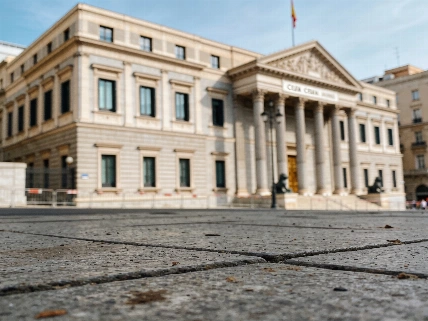
Carles Puigdemont is planning a symbolic return to Catalonia. Judicial delays complicate his preferred dates. Junts says preparations are ready, but the final timing depends on court rulings.
Political tension around Carles Puigdemont has centered on the timing and legal conditions of any return to Catalonia, with court decisions shaping his prospects. The former president of the Generalitat, who has lived in Belgium since 2017, has been linked to plans for a highly symbolic return. The legal picture has continued to evolve through a series of rulings in October 2026.
Puigdemont and Junts per Catalunya had considered September 11, Catalonia’s National Day, or October 1, the anniversary of the 2017 independence referendum, dates with particular significance for the independence movement. A basic development came on October 6, when Spain’s Constitutional Court ruled on former regional minister Dolors Bassa’s appeal over the refusal to apply the amnesty to her malversation conviction. It found that the Supreme Court had violated her right to effective judicial protection and ordered a new decision applying the amnesty to the relevant offence. The court criticized the earlier interpretation as inconsistent and unpredictable. Its ruling was adopted with five dissenting opinions.
The decision set an impressive precedent for other pending cases involving malversation linked to the independence process, but it did not settle Puigdemont’s case. On October 19, Supreme Court investigating judge Pablo Llarena rejected Vox’s appeal of his decision not to reactivate the arrest warrants concerning Puigdemont and Toni Comín. Llarena said the Constitutional Court’s doctrine had to be applied, even if he disagreed with its reasoning. The decision removed the immediate effect of the relevant detention measures, but it did not close the underlying proceedings or definitively extinguish criminal liability.
The next day, October 20, the Supreme Court applied the amnesty to Oriol Junqueras and Raül Romeva. Meanwhile, the Constitutional Court abandoned a planned ruling on Jordi Turull’s appeal after the Supreme Court’s action removed its immediate subject. The sequence changed the legal timetable for other appeals, including those concerning Puigdemont, but did not amount to a final amnesty decision in his case.
Puigdemont has asked the Supreme Court to proceed “without further delay” with applying the amnesty to the malversation offence at issue in his proceedings. In a written submission, he argued that prompt implementation would advance the law’s stated objective of normalizing Catalonia. His request calls for the law to be applied through the required judicial process, not merely for detention measures to be suspended. That distinction lies central to the uncertainty surrounding his return.
Junts officials say the political and logistical preparations are in place, and that Puigdemont will ultimately decide the timing and manner of his return. Secretary-general Jordi Turull has called for the amnesty to be comprehensive enough to allow the return of Puigdemont, Lluís Puig, and Toni Comín. The party’s position puts the focus on judicial implementation: the passage of the 2024 amnesty law alone has not resolved the outstanding legal questions for every independence leader.
Puigdemont’s inner circle has moved cautiously. Early planning involved a small group of confidants, including Josep Rius, Míriam Nogueras, Gonzalo Boye, and Toni Castellà, with decisions kept confidential. The political aim has been described as a mass public event, rather than a low-profile return, to mobilize supporters and demonstrate that Puigdemont retains influence. His activities after returning remain unsettled. Plans have centered on public appearances, including rallies, and travel, rather than taking a seat in the Catalan Parliament as opposition leader.
A dramatic return had been considered before. In July 2024, Puigdemont and his team reportedly explored a surprise appearance in Barcelona during Salvador Illa’s investiture as president of the Generalitat. The plan called for a public speech and decisions about next steps in real time, despite an active arrest warrant. It was abandoned after the risks were judged too high. The episode showed the legal and political complications surrounding any return.
Earlier reporting said Puigdemont was awaiting a ruling from the European Court of Justice before making definitive moves. The October decisions have since changed the immediate legal field, while his own amnesty application still depends on further action by the Supreme Court. The Constitutional Court’s ruling in Bassa’s case offered a favorable interpretation for applying the amnesty to the relevant malversation conduct. It did not itself authorize Puigdemont’s return or formally end his case.
Puigdemont left Spain following the 2017 independence referendum and subsequent legal action against Catalan leaders. Passed in 2024, the amnesty law was intended to address legal consequences arising from the independence process, but its application to malversation became the subject of a dispute between the Supreme Court and Constitutional Court. September 11 and October 1 remain symbolically impressive dates for the movement, while the practical timing of Puigdemont’s return depends on the outstanding judicial proceedings.