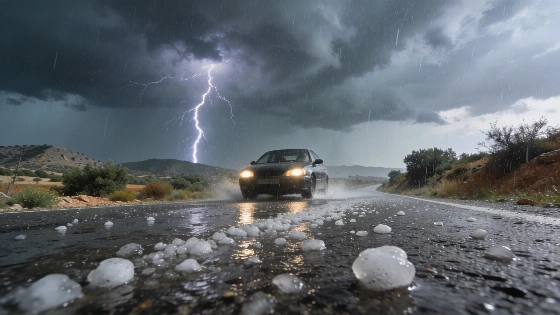
Catalonia is on maximum weather alert. Streets are flooded, transport is down, and emergency warnings have gone out across the region. Up to 180 liters per square meter of rain is expected. Daily life in Barcelona and nearby towns has been thrown into chaos.
On Tuesday, water rushed through Barcelona’s streets and nearby towns. A violent storm hit Catalonia, pushing the region to its highest weather alert. Meteorologists from AEMET and Meteocat warned that up to 180 liters of rain per square meter could fall in just 12 hours. That’s enough to swamp city drains and stop daily life. The red alert focused on Barcelona and the surrounding areas.
In central Barcelona, the Sagrada Familia loomed under dark skies. The metro system struggled. Liceu station was hit hard. Commuters faced delays and closures as water leaked onto platforms. In Nou Barris, a woman tried to push her motorcycle through a flooded street. Scenes like this played out in many neighborhoods. Drains could not keep up. Civil Protection officials, following Catalonia’s emergency service guidance, warned of flash floods and rivers spilling over. The risk stretched beyond Barcelona, hitting coastal and pre-coastal zones too.
The official Es-Alert was sent to residents of Alt Penedès, Anoia, and Baix Llobregat, urging people not to go outside, not to retrieve vehicles, and to avoid basements during the peak of the storm.
Shops and cafes took a hit. In one central café, workers scrambled to bail out water. They fought to stay open as rain crept across the floor. On the streets, umbrellas were everywhere. In Terrassa, a man tried to shield himself from the rain. Elsewhere, people waded through water where sidewalks used to be. The first warnings came the night before. Authorities told the public to expect heavy rain starting September 28. The most dangerous hours would come in the morning of the 29th, according to Catalan Civil Protection.
Outside Barcelona, the Riera de Rubí river rose close to the train tracks of the Generalitat’s railways. That put transport at risk. By the morning of September 29, rivers like the Anoia and Riera de Rubí were already at dangerous levels. Water crept toward railway lines near Sant Sadurní d’Anoia. Civil Protection sent EsAlert messages to people in nine of Catalonia’s biggest counties. They told everyone to be extra careful. But they did not ban travel. No one knew which area would get hit hardest. Officials called for “mucha prudencia” as the weather kept changing. The advice was simple. Stay put and wait for more instructions. No blanket travel bans, just caution.
Flooding was not just a Barcelona problem. Coastal and pre-coastal towns braced for more water and possible landslides. The rain was heavy. The cities are dense. That’s a recipe for flash floods and strain on roads and rails. Transport was hit on both city and suburban lines. Metro stations flooded. Some roads shut down for a while. These details came from Catalan emergency services and independent reports.
The torrential rains in Catalonia were part of a broader storm front affecting much of eastern Spain, with warnings and restrictions also impacting neighboring coastal areas. For Catalonia, however, the situation was considered the most acute on that day, according to multiple reports referencing AEMET and Meteocat.
Spain has faced extreme weather again and again this year. Recent reports on storm alerts show the pattern. But the force and unpredictability of this week’s storm in Catalonia set a new mark for emergency response and public grit.
The rain has not stopped. Catalonia’s struggle shows how much cities need strong planning and quick civil protection. How the region adapts will shape both safety and trust in public systems. For now, images of flooded streets and upended lives are everywhere. Nature can turn a city upside down in hours.