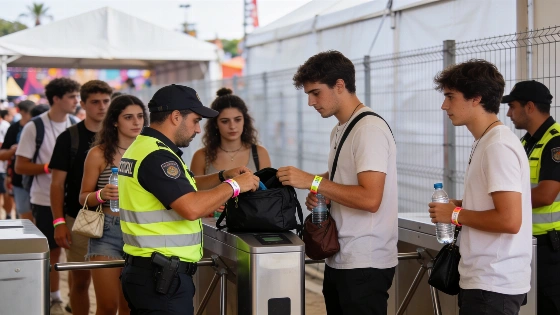
Spain’s Ministry of Consumer Affairs has fined the Reggaeton Beach Festival organiser €320,000. The penalty targets abusive rules on food, re-entry, and refunds. The company must now remove these clauses from its terms.
The organiser of Reggaeton Beach Festival faces a €320,000 fine after Spain’s Ministry of Social Rights, Consumer Affairs and Agenda 2030 identified multiple abusive practices affecting festivalgoers across several regions. The sanction, announced this week, targets four serious violations that limited consumer rights at events held in different autonomous communities.
Authorities found that attendees were barred from bringing outside food and drinks into the festival grounds and were subject to searches at entry. The company also imposed a fee for those wishing to re-enter the venue, effectively restricting free movement. Another key issue was the limitation on refunds: festivalgoers who did not spend all the money loaded onto the event’s cashless payment system—typically electronic wristbands—were denied reimbursement for small leftover amounts, especially if the balance was under two euros. Additional management fees were charged for processing refunds, and ticket buyers faced extra charges unrelated to the actual service provided.
Alongside the financial penalty, the organiser is now required to amend its terms and eliminate all clauses deemed abusive. The investigation began after a complaint from the consumer association Facua-Consumidores en Acción, prompting the Ministry to open a formal case. In its statement, the Ministry also issued guidance for future ticket purchases: the final price must be clear from the outset, including all fees; management charges are only allowed if they correspond to a real service; organisers must guarantee access to tap water inside venues; and banning outside food or drink may be considered abusive if on-site consumption is permitted through purchases.
The Ministry further clarified that ticket resale is not prohibited, but buyers should check whether the event promoter allows it. When purchasing through unofficial channels, it is important to ensure tickets are not nominative, access is guaranteed, and sales are conducted by authorised promoters rather than third-party platforms. These recommendations aim to protect consumers from hidden costs and unfair restrictions, a concern that has also surfaced in other sectors. For example, recent government actions in Spain have addressed issues ranging from festival regulations to emergency funding for local authorities, as seen when the government allocated €25 million to Ceuta to support unaccompanied minors.
Spain’s approach to consumer protection in the events sector reflects a broader trend of tightening oversight on commercial practices. The use of cashless payment systems at festivals has grown rapidly, but authorities now stress the need for transparent refund policies and fair access to basic services. The Ministry’s recommendations highlight the importance of clear pricing, reasonable management fees, and the right to bring essential items into venues. These measures are intended to ensure that festivalgoers are not subject to hidden charges or arbitrary restrictions, reinforcing Spain’s commitment to upholding consumer rights in the entertainment industry.