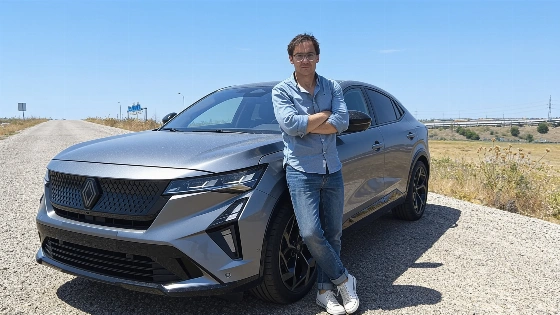
Renault’s Rafale hyper hybrid E-Tech brings 300 hp, all-wheel drive, and a coupe-inspired design. Its real-world electric range and handling make it stand out among plug-in SUVs.
Renault’s Rafale hyper hybrid E-Tech enters the crowded plug-in SUV coupe market with 300 hp and an electric range that puts it near the top of its class. In a segment full of similar-looking models, the Rafale’s technical setup and design offer something different for families who want more than the usual hybrid.
The Rafale uses a three-motor system: a 1.2-litre three-cylinder petrol engine with 150 hp, a 68 hp electric motor at the front, and a 136 hp motor at the rear. This setup gives the car all-wheel drive and a combined output that gets it from 0 to 100 km/h in 6.5 seconds. It’s quick in the mid-range too, covering 60 to 100 km/h in 2.9 seconds and 80 to 120 km/h in 3.5 seconds—numbers that rival many performance SUVs.
The Rafale E-Tech 4x4 300 is equipped with a 22 kWh battery, enabling up to 105 km of electric-only driving on the WLTP cycle—one of the longest ranges among plug-in hybrids in its class.
Official WLTP figures show 2.0 litres per 100 km and up to 105 km of electric-only range. In real-world use, the Rafale averages about 4.0 litres per 100 km and 10.1 kWh electric consumption, which works out to a combined range of 915 km and 82 km on battery alone. Even with the battery empty, fuel use stays reasonable at 6.6 litres per 100 km.
Handling is another strong point. Four-wheel steering is standard, making the Rafale more agile in tight city spaces. The steering is light and doesn’t give much feedback, which can make the car feel unsettled in sharp corners, but adaptive dampers help smooth out the ride on the highway—even with the large 21-inch wheels. The camera-based suspension scan system keeps things comfortable, which is unusual for a car with sporty ambitions.
Inside, the Rafale stands out with its OpenR digital interface, featuring two L-shaped screens. One is a 12-inch Android Automotive-powered display that makes navigation and media easy to use. Physical climate controls are still present, which helps with day-to-day usability, though the gear selector on the steering column can make the area feel crowded and a bit confusing.
According to official Renault configurators and independent European catalogs, the Rafale hyper hybrid E-Tech 4x4 300 is already widely available across several EU countries, with prices typically ranging from 49,954 to 54,454 euros depending on market and trim.
There’s plenty of space in the back, thanks to a 2.74-metre wheelbase. The boot holds at least 627 litres, expanding to 1,910 litres with the rear seats folded. However, a high loading lip and a step in the floor make it less convenient for heavy items, and the maximum payload is 457 kg.
Drivers can switch between Eco, Comfort, and Sport modes using the Multi-Sense button on the steering wheel. The differences between modes are subtle, with Sport mode only slightly sharpening throttle response. Still, the hybrid system delivers power smoothly and efficiently, making the Rafale a practical choice for those who want performance without giving up range or everyday usability.
Renault’s approach with the Rafale follows a wider move among European carmakers to make plug-in hybrids more than just compliance models. As seen with the Mercedes CLA 250 Plus Shooting Brake, expectations for electric range and real-world practicality are rising.
The Rafale stands out by combining strong performance with real efficiency. It’s not the typical soft hybrid. Instead, it’s Renault’s attempt to offer something different in both looks and substance. For buyers who want a plug-in SUV that delivers on its promises, the Rafale hyper hybrid E-Tech is a rare example of engineering that works in practice, not just on paper.